


I went looking for a straight comparison of Airalo alternatives and gave up on the first page of results.
Not because the articles were bad exactly. Because two of the most detailed ones I found were published by eSIM companies selling one of the products in their own list. To their credit both said so openly, near the top. But it does mean the ranking was never going to end anywhere else.
So I went through the plans myself, and one thing kept coming up that almost nobody puts in the headline. On these plans, unlimited does not mean unlimited. Not on Airalo, not on most of the alternatives. It means full speed up to a daily ceiling, then a hard drop.
Once you know that, the comparison gets much easier.
The Short Answer
Nomad is the best Airalo alternative if you care about price per gigabyte. Saily is the best for light users and long-tail destinations. Holafly is the one to pick if you genuinely want to stop counting, and you accept it will cost more. Ubigi is the pick for Japan and South Korea.
Airalo itself is still the widest catalogue and the safest default. It is not a bad product. It is just rarely the cheapest one for the specific trip you are taking.
And if your trip is one country for one week, the honest answer is that all of these are close enough that you should stop researching and buy whichever is cheapest today.
The Thing About "Unlimited"
Here is what sent me down this hole.
Airalo's Europe plans that carry the word Unlimited in the name give you 3GB per day at full speed. After that the connection drops to about 1000 kbps for the rest of that day, and resets the next morning.
1000 kbps is roughly one megabit. That is fine for WhatsApp and maps. It is miserable for anything else.
And Airalo is not the outlier here. Nearly every provider selling unlimited works the same way, they just set the ceiling in different places. From what I could gather across comparison sources:
Provider | Full-speed data per day | Then |
|---|---|---|
Saily | around 5GB | throttled to roughly 1 Mbps |
GigSky | around 3.5GB | throttled |
Airalo | around 3GB | around 1000 kbps |
Jetpac | around 3GB | throttled |
Holafly | no published daily cap | unpublished fair use policy |
So when you compare two unlimited plans that are priced within a couple of dollars of each other, the price is not the difference. The ceiling is.
Holafly is the interesting case because it does not publish a daily cap at all. That is genuinely different from the others, and it is why people who use a lot of data end up there. The catch is that the fair use policy is not published either, so you are trusting rather than checking. Its hotspot is also capped at around 1GB a day, which matters if you tether a laptop.
What I Could Not Verify
Being upfront about this, because it changes how much weight to put on the numbers below.
Airalo, Nomad, Saily and Holafly all render prices in JavaScript, and they vary the display by region and currency. I could not pull live prices off their own pages the way I would prefer. The figures here come from comparison sources and aggregator listings checked on August 25, 2026, converted to US dollars where the provider publishes in euros.
Treat every price in this article as a guide to the shape of the market, not a quote. Check the actual number at checkout, in your own currency, on the day.
I also could not verify the speed test claims that get thrown around in this category. You will see articles saying one provider is four times faster than another. Speed on a travel eSIM is mostly decided by which local carrier the provider resells and how congested that tower is, so a number from one city on one afternoon does not tell you much about your trip.
The 7 Alternatives Worth Knowing
1. Nomad, if you are counting cost per gigabyte
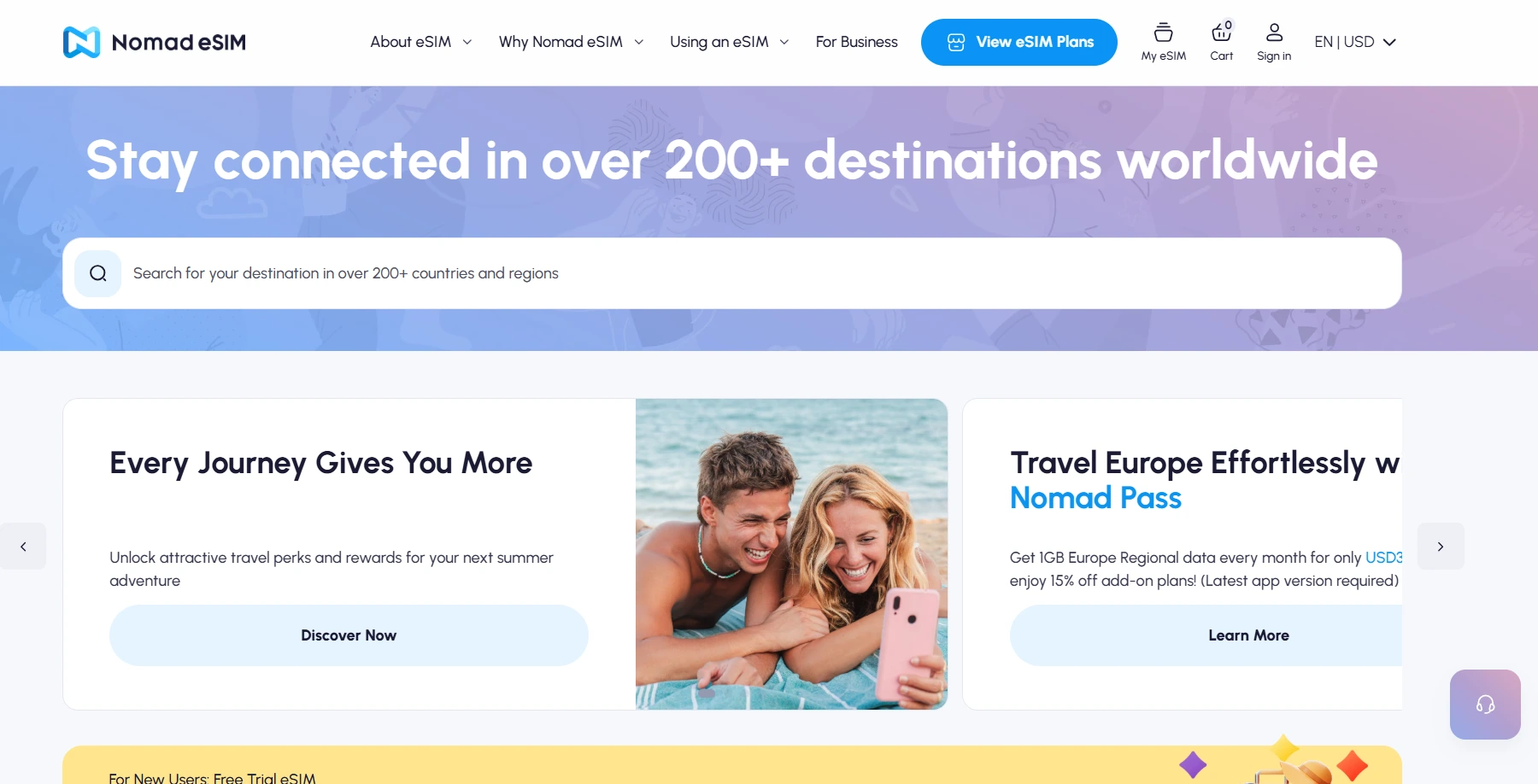 Nomad is the one that consistently undercuts on the data you are actually buying. Roughly $17.50 for 5GB in Europe, around $23 for 10GB, and around $35 for 50GB. At volume nothing else in this list gets close.
Its Europe plan covers around 35 countries against Airalo's 42, which only matters if your route crosses a border Airalo covers and Nomad does not. There is also a Global plan at around $129 for 50GB valid a full year, which is the most sensible thing in this whole category for someone who takes three or four trips a year and does not want to think about it again.
The app is less polished than Airalo's. That is the trade.
2. Saily, if you are a light user
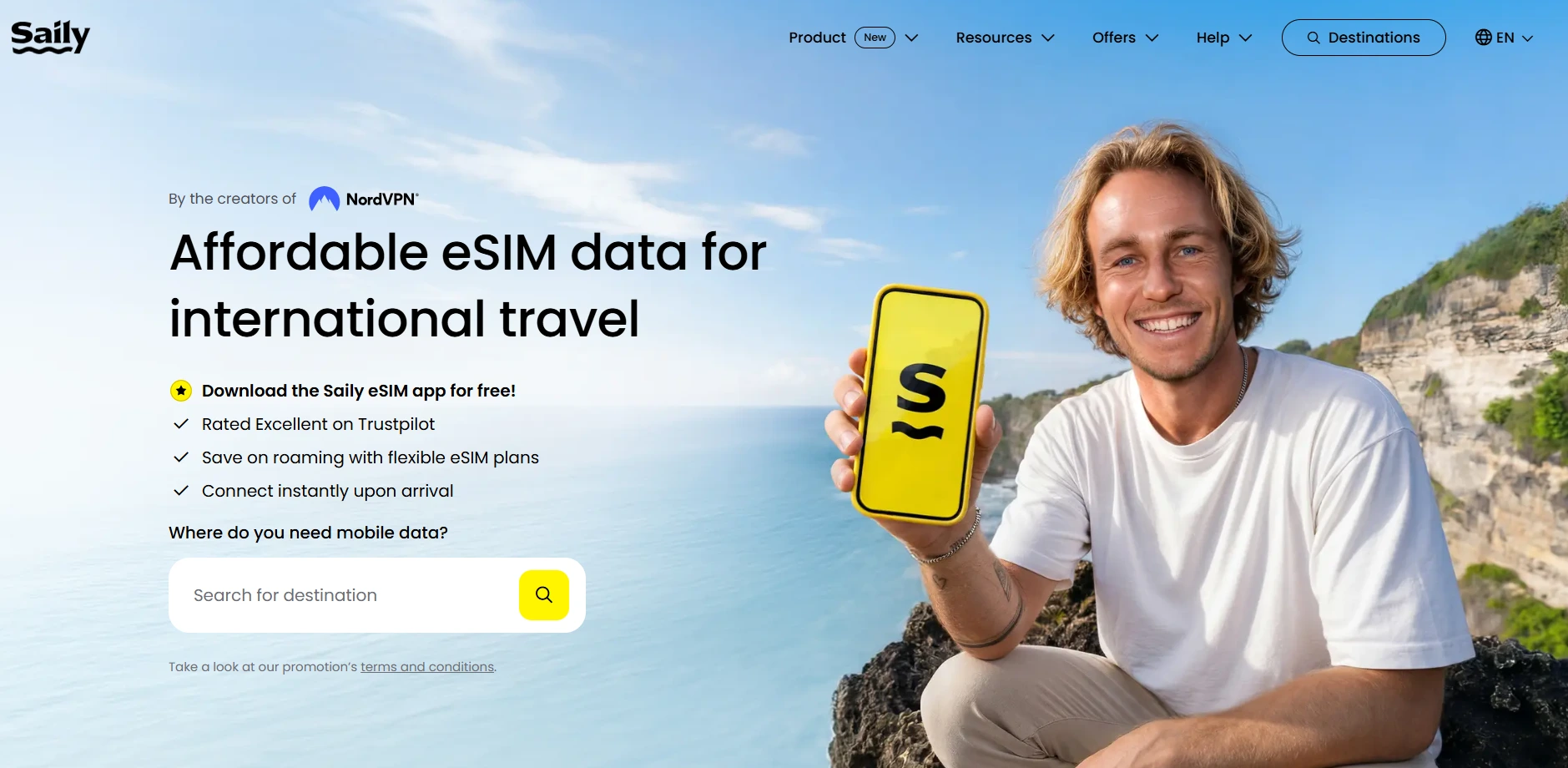 Saily starts around $4.99 for 1GB, which makes it the value pick when you only need enough data for maps and messages. It is built by the NordVPN people, so it bundles some security extras, and if you already live in that ecosystem it will feel familiar.
Its unlimited plans have the most generous daily ceiling I found, around 5GB before throttling. Europe coverage sits at roughly 35 countries.
The honest caveat is that Saily is newer, and newer means less accumulated evidence about rural coverage. Some users report activation taking longer on first use.
3. Holafly, if you want to stop counting
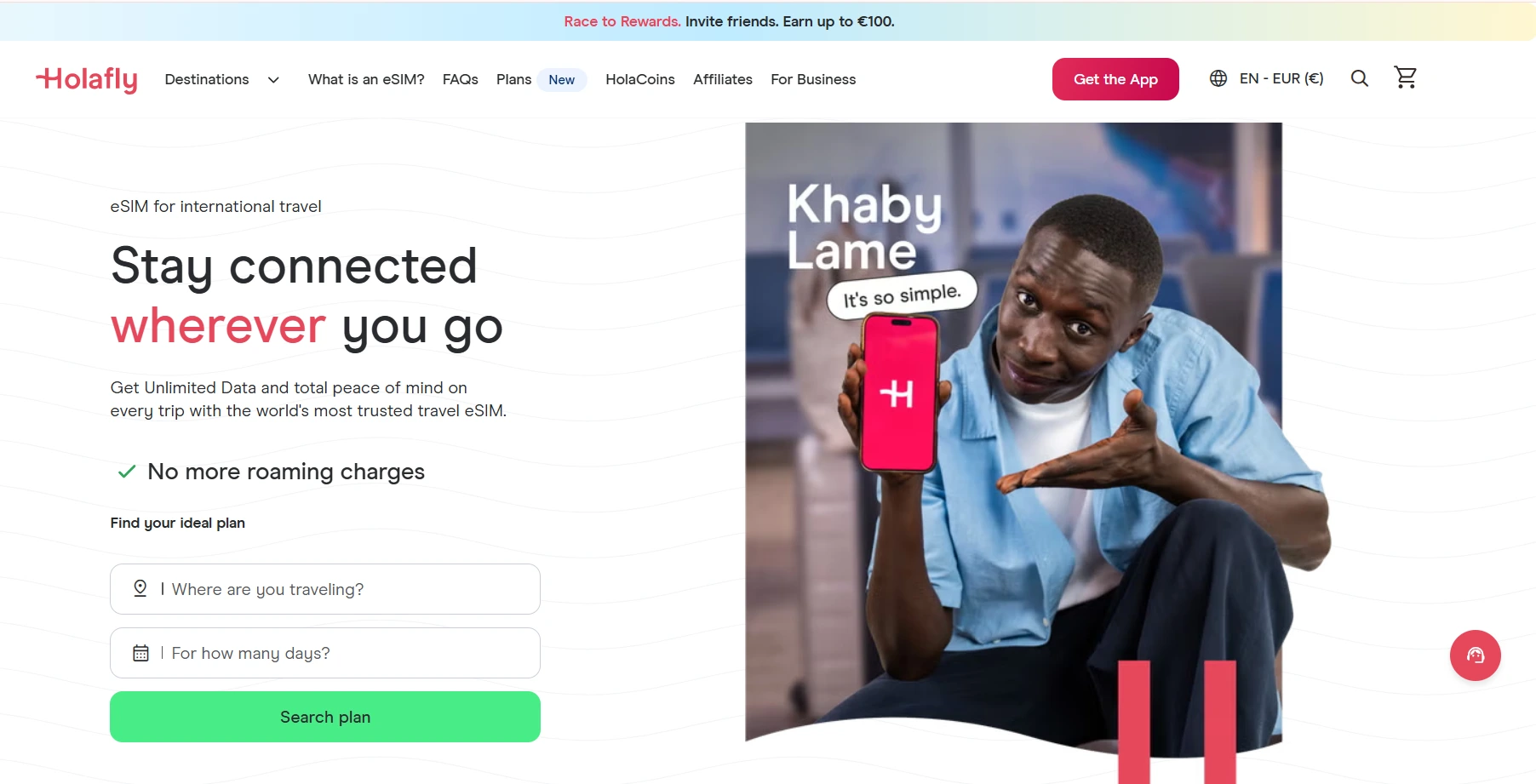 Holafly sells days rather than gigabytes. Around $27.50 for a week in Europe, and roughly $65 to $69 for a month.
That is expensive next to a fixed 10GB plan, and for most travellers it is the wrong purchase. A normal day of maps, messaging and some browsing runs one to two gigabytes, not five. If that is you, you are paying for headroom you will not use.
But if you stream, take video calls, or work from the road, the maths flips. Twenty gigabytes on a metered plan plus two panicked top-ups can easily cost more than the unlimited plan you should have bought on day one.
Holafly also has by far the strongest review base in this group, somewhere around 4.7 on Trustpilot from roughly a hundred thousand reviews. That is a lot of people, and it is worth something.
4. Ubigi, if you are going to Japan or Korea
 Ubigi keeps coming up specifically for 5G reliability in Japan and South Korea, and it has an annual option at around $199 for 5GB a month, which suits someone who travels constantly in small bursts rather than in big trips.
It is not the one I would pick for a two week holiday in Spain. For east Asia it is the one people keep coming back to.
5. Jetpac, if you tether constantly
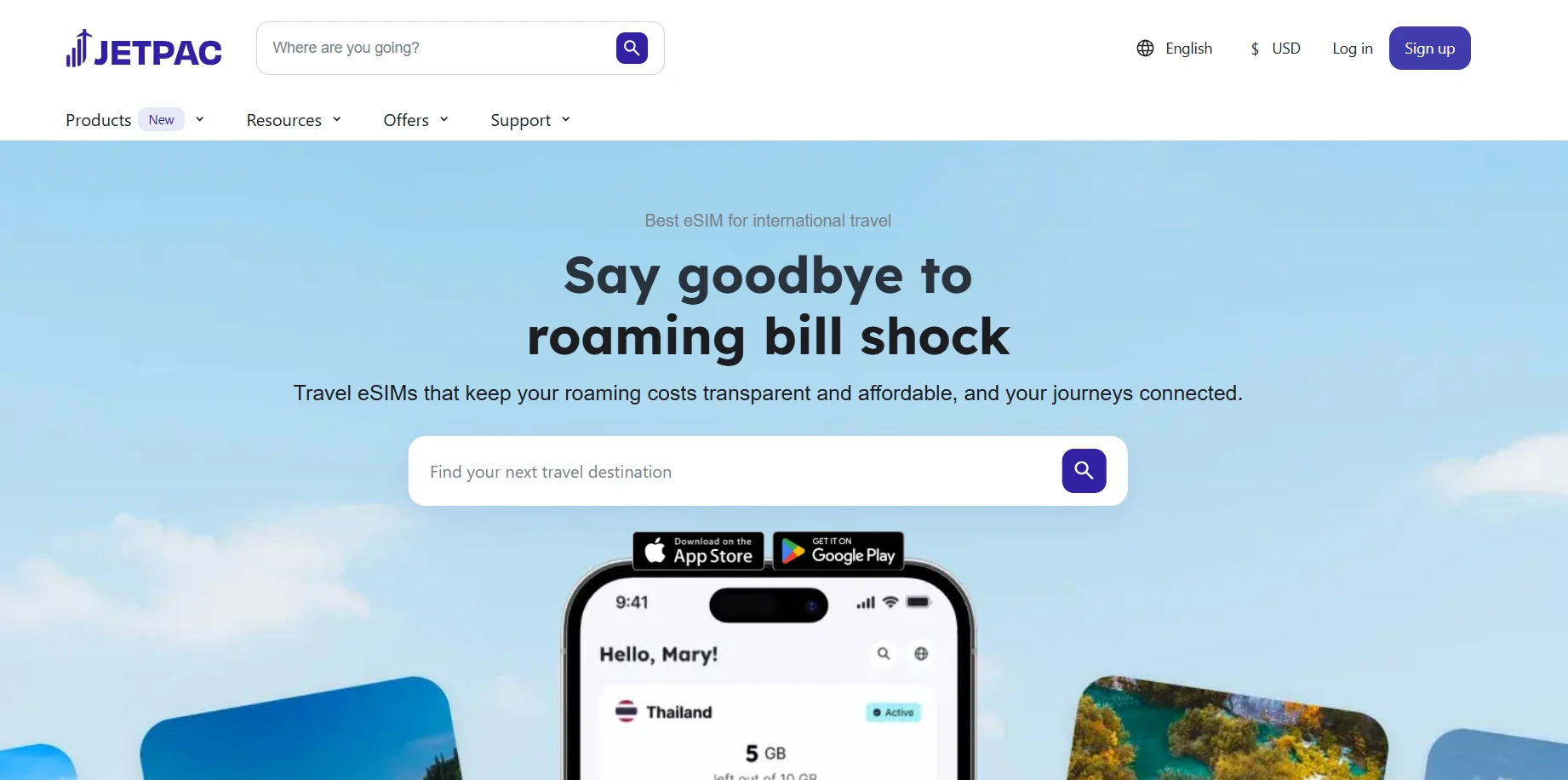 Jetpac is the one worth knowing for a specific reason. It advertises unlimited hotspot with no separate allowance, which is unusual, because tethering is where most providers quietly put a cap. Holafly limits it to roughly a gigabyte a day. Jetpac says it does not.
Its full-speed daily ceiling sits around 3GB, so the same as Airalo. If you work off a laptop through your phone, that hotspot policy is worth more than a couple of dollars of price difference.
6. GigSky, for a slightly higher ceiling
 GigSky's unlimited plans throttle at around 3.5GB a day, which is a little more headroom than Airalo or Jetpac and a little less than Saily. It also sells a global plan.
There is not much else that separates it. It is a reasonable pick if it happens to be cheapest for your country and you want a marginally higher ceiling than the default.
7. Maya Mobile, if you are going to sea
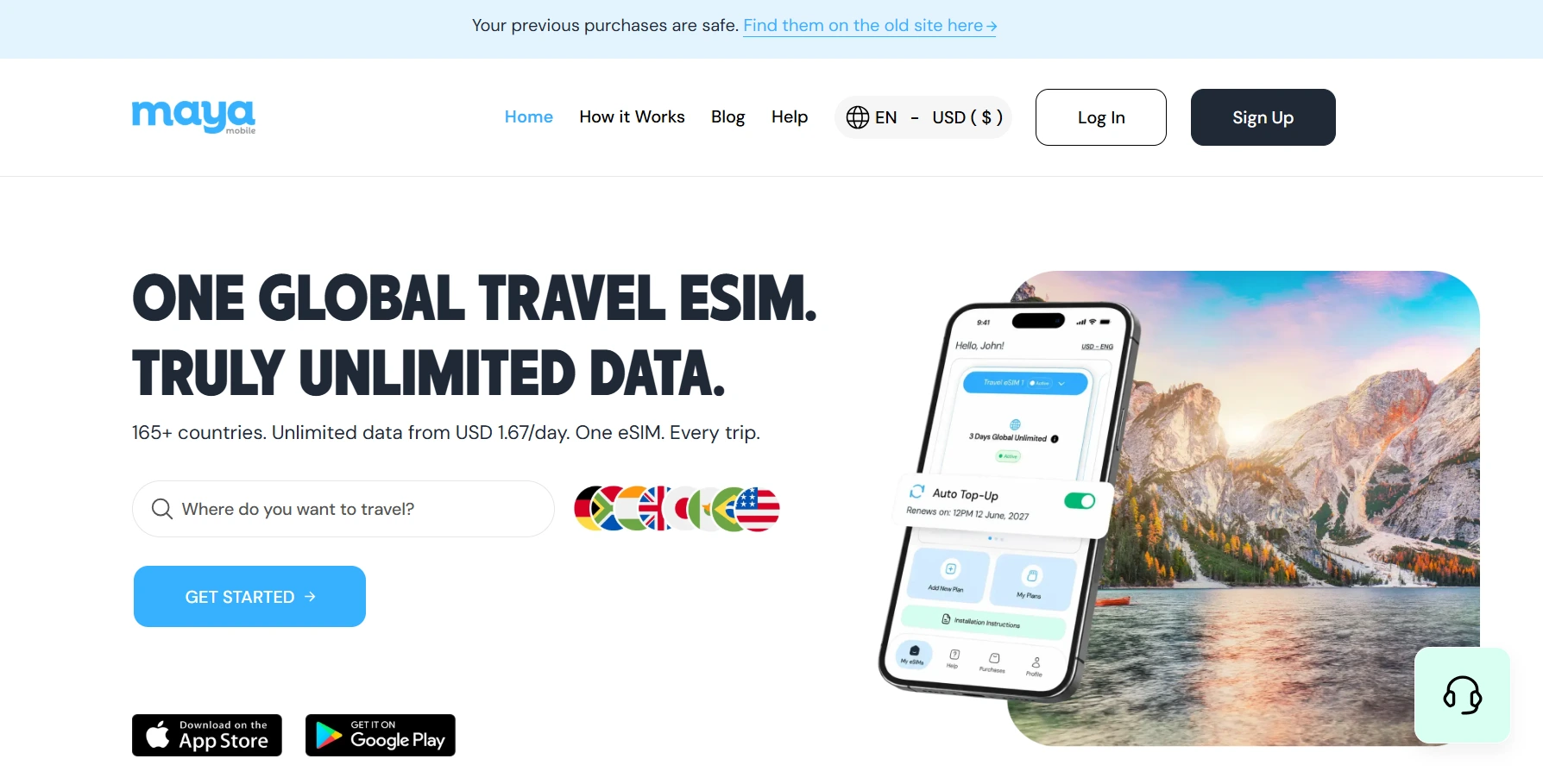 This is a genuine niche rather than a general recommendation. Maya is the only provider I found with real maritime coverage, working on twenty or more cruise lines rather than only in port. Plans start around $49.99 for three days.
That is expensive for land travel and you should ignore it entirely unless you are on a ship. If you are on a ship, it is close to the only answer here.
Two I left out
aloSIM and Yesim both come up in this category and both appear to work fine. I could not find enough substantive detail on either to tell you when they would beat the seven above, so I have not ranked them rather than padding the list.
If you are shopping seriously, skip the roundups, including mine, and go straight to eSIMDB, which lists plans from most providers side by side and lets you filter by country and data amount. It is the tool I wish somebody had pointed me at first.
By Destination
Europe. Airalo covers the most ground on one plan at 42 countries, which matters on a multi-country rail trip and does not matter at all if you are only going to Portugal. Nomad wins on price, Saily on small plans.
United States. Coverage is broadly similar across providers because they are all reselling the same handful of networks. Pick on price. Do check whether you want a plan that includes a phone number, because most of these are data only.
Asia. Airalo's catalogue depth is a real advantage here, because it has local plans in places the smaller providers skip. Ubigi for Japan and Korea specifically.
Everywhere at once. A global plan sounds appealing and is usually poor value. Nomad's year-long 50GB global plan is the exception worth a look.
The Thing Nobody Mentions
None of these gives you a real phone number.
Every mainstream travel eSIM in this comparison is data only. Your calls and texts still run through your home number, which means roaming charges unless you disable it, and it means any service that sends you an SMS verification code is going to be a problem if your home line is switched off.
A few smaller providers do sell plans with an actual number attached. If two-factor codes by SMS are part of your life, that is worth more than saving four dollars on data.
I ran into a similar gap when I looked at SMS-Activate alternatives, where the whole category exists because phone numbers and data have drifted apart as products.
So Is Airalo Actually Worth Leaving?
Depends entirely on what annoyed you.
If it was price, yes, leave. Nomad or Saily will cost you less for the same trip, and it is not close at higher data volumes.
If it was the throttling on an unlimited plan, then no, leaving does not help much, because you will hit a ceiling almost everywhere. Holafly is the only real escape and it costs more.
If it was coverage, be careful. Airalo has the widest catalogue in this group. Leaving usually means less coverage, not more.
And if nothing annoyed you and you are just optimising, buy the cheapest plan that covers your countries and stop reading comparison articles. The difference between the top five providers on a one week trip is usually under ten dollars.
Questions People Ask
What is the best Airalo alternative?
Nomad for price per gigabyte, Saily for small plans, Holafly for unlimited, Ubigi for Japan and Korea.
What is the cheapest Airalo alternative?
Nomad at volume, Saily for small amounts of data.
Is Holafly better than Airalo?
Only if you use a lot of data. It is the one provider without a published daily ceiling, and it costs more.
Is Saily better than Airalo?
Cheaper for light use and more generous on the unlimited ceiling. Narrower coverage and less track record.
Is Nomad better than Airalo?
On price, clearly. On coverage and app polish, no.
Which eSIM has the best coverage?
Airalo, by catalogue size, which is the main reason it stays the default.
Which eSIM offers truly unlimited data?
Effectively none. Holafly comes closest because it publishes no daily cap, but its fair use policy is not published either.
Do these give me a phone number?
No. All the major ones are data only.
Can I use hotspot?
Usually yes on fixed plans. Holafly caps tethering at around 1GB a day, which is the one to watch. Jetpac is the one that advertises unlimited hotspot with no separate allowance.
Should I buy before I travel?
Yes. Install it at home on wifi. Activation on arrival with no connection is where people get stuck.
What I Would Actually Do
One country, one week, light use: buy the cheapest plan that covers it. Saily or Nomad, whichever is lower today.
Multi-country trip across Europe: check the country list before the price. Airalo's 42 country plan may be worth a few dollars more than Nomad's 35 if your route crosses the gap.
Heavy user or working remotely: Holafly, and accept the cost.
Several short trips a year: Nomad's year-long global plan, installed once and forgotten.
Whatever you pick, buy it before you leave, and check the daily full-speed allowance rather than the word on the box.
Prices in this article were taken from provider comparison sources and aggregator listings on August 25, 2026, and converted to US dollars where providers publish in euros. eSIM pricing changes frequently and varies by region, so confirm at checkout.