


Here's a technical description of an AI chatbot: transformer neural networks, tokenization, vector embeddings.
Here's the same thing explained differently: software that understands text and responds like a human, automating support and scheduling so businesses can respond faster without adding staff.
Read both again. The first is accurate and tells you nothing useful. The second tells you exactly what it does and why you'd care. That gap between the two is what I got curious about.
I studied media sciences, and one thing that gets drilled into you early is that information only matters if someone can actually follow it. So I went looking into what separates tech explanations that land from the ones that make people's eyes glaze over.
Here's what I found.
This Isn't a Product, It's a Habit
What I'm calling Summarize Tech here isn't an app or a piece of software, it's an approach. Taking complex technology topics and explaining them so anyone can follow, whether they're a complete beginner, someone making a buying decision, or a manager explaining strategy to their team.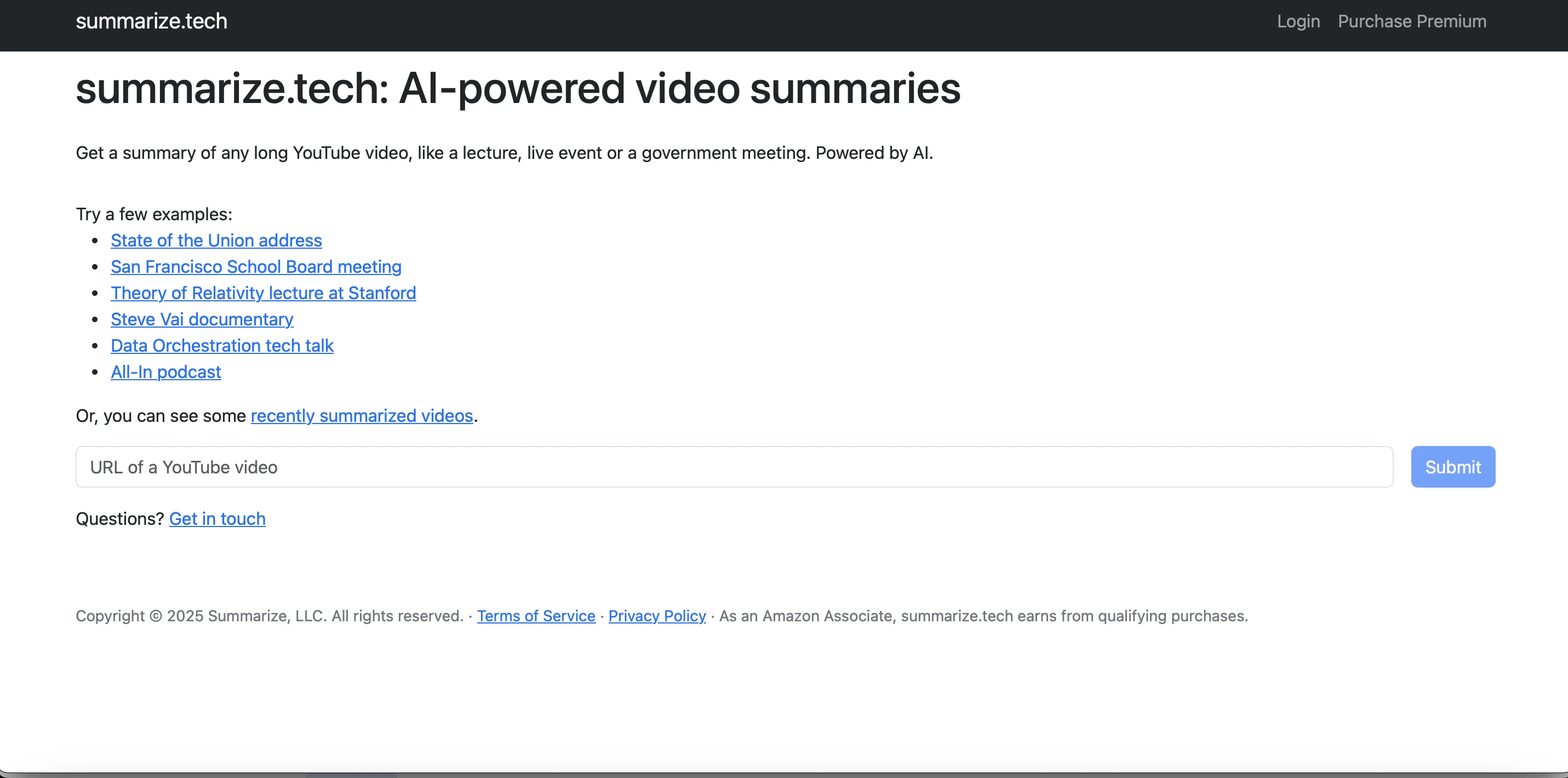 The goal sounds simple. Strip the jargon, focus on what actually matters, and explain things in a way that helps people decide something. Most tech content does the opposite, it drowns you in detail and leaves you more lost than when you started.
And getting this wrong isn't a small, harmless problem. Poor communication costs businesses close to 1.2 trillion dollars annually in lost productivity, according to a 2026 communication skills report. A real chunk of that traces back to technical topics explained badly, decisions delayed, teams misaligned, budgets approved for the wrong reasons.
Start With the Problem, Not the Mechanism
Every good tech explanation starts in the same place. Not with how something works, not with specs, but with one question: what problem does this actually solve.
That's the anchor everything else connects back to. Skip this step and you get the chatbot example from the top of this piece, technically correct, completely disconnected from why anyone should care.
Here's where people commonly go wrong at this exact step. They lead with the mechanism because it feels more impressive, or they assume the problem is obvious when it isn't. Both leave the reader working to figure out relevance on their own, which most people simply won't do.
Explain the Mechanism, But Only Just Enough
Once the problem is clear, the next step is explaining how the thing works, but only at the altitude a normal person needs, not the altitude that shows off what you know.
Cover three things here. What it is, how it works at a high level, and what makes it different from the alternatives. Nothing about implementation, nothing about architecture unless the reader specifically needs that.
This is where oversimplifying becomes a real risk, not just an abstract warning. There's a meaningful difference between saying "AI replaces human judgment" and "AI assists human judgment." The first is a catchier sentence. The second is the accurate one. Simplicity and accuracy aren't opposites, but it's easy to trade one for the other without noticing.
Blockchain is a useful test case here. The technical version: distributed ledger in a peer-to-peer network using cryptographic hashes. The version that actually communicates something: a shared digital record that securely logs transactions across many computers so no single party controls it, useful for supply chain tracking and record keeping where trust between parties matters. Same technology, only one version gives the reader something to do with it.
Ground It in Something the Reader Already Recognizes
Abstract explanations don't stick, examples do. This is the step most tech content skips entirely, or does halfheartedly.
Cloud computing again as a test case. The technical version: virtualization, hypervisors, multi-tenant scaling, pay-per-use architecture. The version people actually retain: renting computing power and storage online instead of owning physical servers, which lets companies scale up or down without a big upfront hardware cost.
The difference isn't accuracy, both versions are correct. The difference is which one a person can actually act on five minutes later.
Say the Quiet Part About Limitations
Every technology has trade-offs, and this is the step that gets cut most often, usually because acknowledging a limitation feels like weakening the pitch.
It does the opposite. A summary that only lists strengths reads as marketing, not information, and readers pick up on that instantly even if they can't name why they don't trust it. Naming the limitation, cost, risk, or where the technology genuinely falls short, is what makes the rest of the explanation credible.
If someone makes a decision based on a summary and the limitation you left out turns out to matter for them, the explanation failed regardless of how well the rest of it was written.
Mention Where It's Headed, Briefly
This step doesn't need to be long. A short note on where a technology is trending helps readers think strategically about timing, whether to adopt now or wait, rather than treating the technology as a fixed, finished thing.
You don't need to predict the future accurately here. You just need to give enough context that the reader isn't caught flat-footed by the next version of whatever you just explained.
The Habits That Actually Separate Good From Bad
A few practices consistently show up in explanations that work, worth naming directly rather than folding into the steps above.
Testing for clarity is the most underused one. Share the explanation with someone who knows nothing about the topic. If they look confused, that's the signal to revise, not a sign the reader wasn't paying attention.
Tailoring depth to the actual audience matters more than most writers admit. A beginner and a senior manager need genuinely different explanations, not the same one delivered at different lengths.
Framing examples as small before-and-after moments sticks better than plain facts, since people remember narratives more easily than information dumps.
And refreshing content regularly matters more in tech than most other topics. A summary accurate eighteen months ago can quietly mislead someone today, technology moves fast enough that six to twelve months is a reasonable check-in point.
If clear communication is something you're actively working on beyond just tech topics, I looked into a related practice in my piece on what sentence builders actually are, since a lot of what makes an explanation land comes down to basic sentence clarity more than subject knowledge.
Where This Is Actually Headed
A few shifts are already visible. AI-assisted summarizing is happening now, with language models helping draft and tailor tech content for specific audiences, and this will likely become standard for anyone producing this kind of content at scale.
Multimedia summaries are growing too, a well-made two-minute video sometimes covers what would take ten minutes to read. And personalized explanations that adjust based on someone's skill level or industry are still emerging, but that shift is coming.
Does Practicing This Actually Matter
I think it does, on either side of the conversation. Whether you need to understand technology to make a decision, or you need to explain it to someone else, the same six steps hold up regardless of the topic.
Start with the problem. Explain the mechanism at the right altitude. Ground it in something recognizable. Say the limitation out loud. Mention where it's headed. Test it on someone who knows nothing about it.
Do that consistently and you're already ahead of most people writing about technology right now.
Frequently Asked Questions
What is Summarize Tech?
It's an approach to explaining complex technology topics in plain language so anyone can understand them without a technical background.
Who benefits most from this approach?
Beginners new to a technology, business leaders making buying decisions, and professionals who need to explain technical topics clearly to their teams.
What makes a tech explanation actually work?
Starting with the problem it solves, explaining the mechanism at a high level, grounding it in a recognizable example, and being honest about its limitations.
Do I need a technical background to explain technology well?
No, clear writing and thinking from the reader's perspective matter more. Too much technical depth can make explanations harder to follow, not easier.
How often should tech explanations be updated?
Every six to twelve months is a reasonable baseline, since technology moves fast enough that year-old content can quietly become misleading.