


The best rotating proxy providers in 2026 are Live Proxies for mixing fast rotation with longer sessions, ProxyEmpire for moving from discovery to verification, Webshare for developer-managed endpoints, and DataImpulse for low-cost batch work. SOAX, Rayobyte, IPRoyal, Infatica, Oxylabs and Decodo round out the list. Entry prices run from $1 to about $7 per GB, so match the rotation controls to your workload before you compare price.
Rotating proxies are most useful when an application needs multiple network identities but still requires control over when those identities change. A provider may rotate the exit IP on every request, preserve it through a sticky session, replace it after a defined time window, or let the application reset the session manually. Those differences affect data consistency, geographic accuracy, retry behavior, and the number of usable identities available to parallel workloads.
DataReportal reports that 6.15 billion people were using the internet at the start of October 2026, equivalent to 73.9% of the global population. As web activity spans more markets, networks, and device environments, large data workflows increasingly need to control not only where traffic originates but also when the network identity changes. The best rotating proxy providers therefore stand out through session control, geo-aware rotation, pool diversity, concurrency, and predictable IP replacement rather than headline pool size alone.
What Actually Happens When a Proxy Rotates an IP?
A rotating proxy usually keeps the application connected to the same gateway while changing the exit IP behind it. The configured hostname and port may therefore remain identical even though consecutive requests reach the destination from different addresses.
Gateway Assignment: The application connects to a stable provider gateway that selects an exit IP from the available pool.
Per-Request Rotation: A new exit can be assigned whenever the application sends another independent request.
Sticky Sessions: A session identifier keeps several related requests tied to the same exit for a defined period.
Timed Rotation: The provider replaces the active IP after a configured interval rather than on every request.
Manual Reset: Applications can end a session deliberately when they need a fresh identity before the normal expiration point.
Geo Filtering: Country, city, ASN, or other filters reduce the pool from which each new exit is selected.
The important distinction is between the proxy endpoint configured in the application and the exit IP visible to the destination. A rotating gateway can stay unchanged while the exit identity changes repeatedly.
Which Rotation Method Fits Different Workloads?
Rotation works best when the change in network identity occurs at a meaningful workload boundary. Independent requests can tolerate frequent changes, while multi-step processes often need continuity until the task is complete.
Per-Request Rotation
Per-request rotation assigns a new exit to each independent request and is particularly effective for large URL queues, broad discovery, SERP collection, and other high-volume workloads where one page does not depend on the state created by the previous page. It maximizes IP diversity but becomes less suitable when cookies, pagination, carts, authentication, or related page sequences need to remain connected to one identity.
Timed Rotation
Timed rotation keeps an IP for a defined interval and replaces it automatically after that period. This model fits monitoring jobs, repeated observations, short browsing sequences, and continuously running workers that need some identity stability without maintaining one address indefinitely.
Sticky Sessions
Sticky sessions preserve the same exit across a related sequence of requests. Pagination, localized research, multi-step browser workflows, authenticated environments, and jobs that maintain cookies or application state often benefit from stickiness because changing IP mid-task can alter the environment or invalidate the session.
Manual Rotation
Manual rotation gives the application direct control over the boundary between identities. It is useful for target verification, reputation testing, failure recovery, and controlled experiments where the team needs to determine whether behavior changes after deliberately replacing the current IP.
Why Can Rotating Too Often Hurt Data Quality?
Maximum rotation frequency is not automatically the best strategy. Changing IP at the wrong moment can introduce new variables into the dataset and make the resulting differences difficult to interpret.
Location Drift: A new exit can change city, ISP, or regional context during one workflow.
Session Resets: Websites may invalidate or challenge state when the apparent network identity changes unexpectedly.
Cookie Inconsistency: Browser cookies can remain constant while the IP changes, creating an environment different from the one established earlier.
Regional Content Changes: Search results, prices, ads, and availability can vary when consecutive requests originate from different locations.
Workflow Disruption: Carts, forms, pagination, and related page sequences may break when the identity changes too early.
Harder Troubleshooting: Frequent rotation makes it more difficult to determine whether a failure originated from the IP, target, application, or session state.
For many production workflows, the objective is therefore a fresh IP at the correct boundary, not a fresh IP on every possible request.
How Do You Choose the Right Rotation Cadence?
Rotation cadence needs to reflect request independence, session duration, target sensitivity, geography, and the amount of state that must survive between requests. The same application may use several rotation policies for different job types.
Rotate by Request
Request-level rotation works best when each URL can be processed independently and the result does not depend on an earlier session. Large public datasets, broad discovery jobs, and high-volume page retrieval can distribute requests across many exits without preserving identity between pages.
Rotate by Task
Task-level rotation gives one job a consistent identity and replaces it only when that job finishes. This model works well for related page sequences, browser automation, AI-agent runs, and other workflows where multiple requests collectively form one logical task.
Rotate by Time
Time-based rotation suits continuous workers and scheduled monitoring where an identity can remain active for a predictable interval before being refreshed. The interval needs to be long enough to preserve useful continuity but short enough to prevent excessive traffic concentration on one exit.
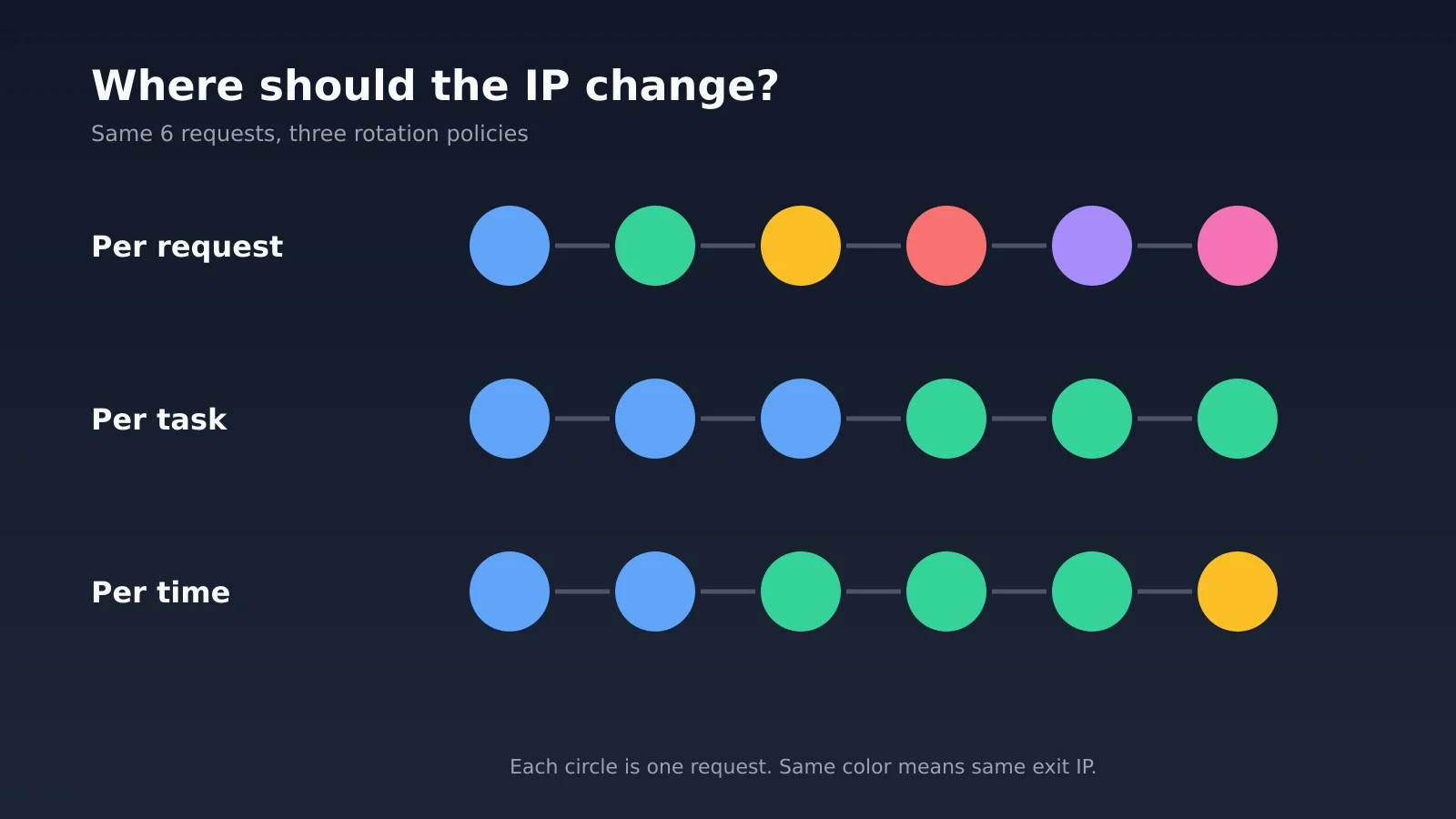 The same six requests under three rotation policies.
What Matters Most When Comparing Rotating Proxy Providers?
The largest advertised pool is not automatically the strongest rotating proxy network. Operational value depends on how precisely the provider lets users control identity changes and how reliably that behavior holds up on real destinations.
Rotation Modes: Check whether the provider supports per-request, sticky, timed, or manually reset sessions.
Session Flexibility: Compare how long identities can persist and whether different workers can use different session policies simultaneously.
IP Reuse Behavior: Frequent rotation matters less if the gateway repeatedly cycles through the same small subset of exits.
Geo Routing: Narrow targeting can improve location accuracy but may reduce the pool available for rotation.
Concurrency: Large deployments need enough independent sessions or threads to prevent workers from competing for the same identities.
Gateway and API Control: Endpoint generators, session IDs, APIs, and dashboards make it easier to implement different policies across production jobs.
What Are the 10 Best Rotating Proxy Providers in 2026?
The providers below are compared specifically by how much control they provide over rotation itself. Session behavior, persistence, geographic routing, network types, and parallel execution matter more here than a single headline IP count.
Provider | Rotation Modes | Sticky Session Control | Rotation Control | Proxy Types | Geo Routing | Best Rotation Pattern |
|---|---|---|---|---|---|---|
1. Live Proxies | Dynamic rotation and sticky access | Standard residential sticky sessions last up to 60 minutes, with longer sessions for eligible B2B configurations on request | Session-based and workload-specific | Rotating residential, rotating mobile | Country, city, ASN | Mixed aggressive rotation and persistent workflows |
2. ProxyEmpire | Per-request, sticky, timed | Custom TTL up to 2h, same-IP mode can persist longer when peer remains online | Session ID and manual rotation | Residential, mobile, ISP, datacenter | Country, region, city, ISP, ASN, ZIP depending on product | Discovery followed by persistent verification |
3. Webshare | Per-request and sticky | 1 min to 24h | Endpoint Generator and session selection | Rotating residential, static residential, datacenter | Country, state, city, ZIP, ASN on rotating residential | Developer-managed rotation policies |
4. DataImpulse | Rotating and sticky | Session-based sticky access | Gateway and session configuration | Residential, premium residential, mobile, datacenter | Country and other product-dependent filters | Cost-sensitive batch rotation |
5. SOAX | Per request, after N requests, timed, on error, sticky | Customizable persistence | Highly configurable routing | Residential, mobile, ISP, datacenter | Country, state, city, ASN | Geo-sensitive controlled rotation |
6. Rayobyte | Per-request, sticky, strict sticky | Session IDs with soft or strict persistence | Per-worker session control | Residential, rotating ISP, rotating datacenter and static networks | Country, state, city, ZIP, ASN on residential | Mixed network architectures |
7. IPRoyal | Per-request or sticky | 1 second to 7 days when peer remains online | TTL-based session control | Residential, ISP, datacenter, mobile | Country, state, city | Long sticky workflows with rotation between tasks |
8. Infatica | Per-request, timed, sticky | Timed intervals from 5 to 60 min plus sticky | Rotation period configuration | Residential, mobile, ISP, datacenter | Country, region, city, ISP, ZIP | Predictable recurring rotation |
9. Oxylabs | Rotating and sticky | Session control across major proxy products | Session IDs and endpoint configuration | Residential, mobile, ISP, dedicated ISP, datacenter | Country, state, city, ZIP, ASN and advanced options | Enterprise-scale worker fleets |
10. Decodo | Per-request and sticky | Fixed intervals and custom sessions up to 24h | Dashboard and API configuration | Residential, mobile, ISP, datacenter | Country, state, city, ZIP, ASN | Multi-queue automated workloads |
What Do Rotating Proxy Providers Cost?
We checked the live pricing page of every provider on this list in November 2026. Most rotating proxy providers charge per GB of traffic, and the price per GB drops as you buy more. So the fairest way to compare them is the price of the smallest purchase you can make, which is what a team pays while it is still testing.
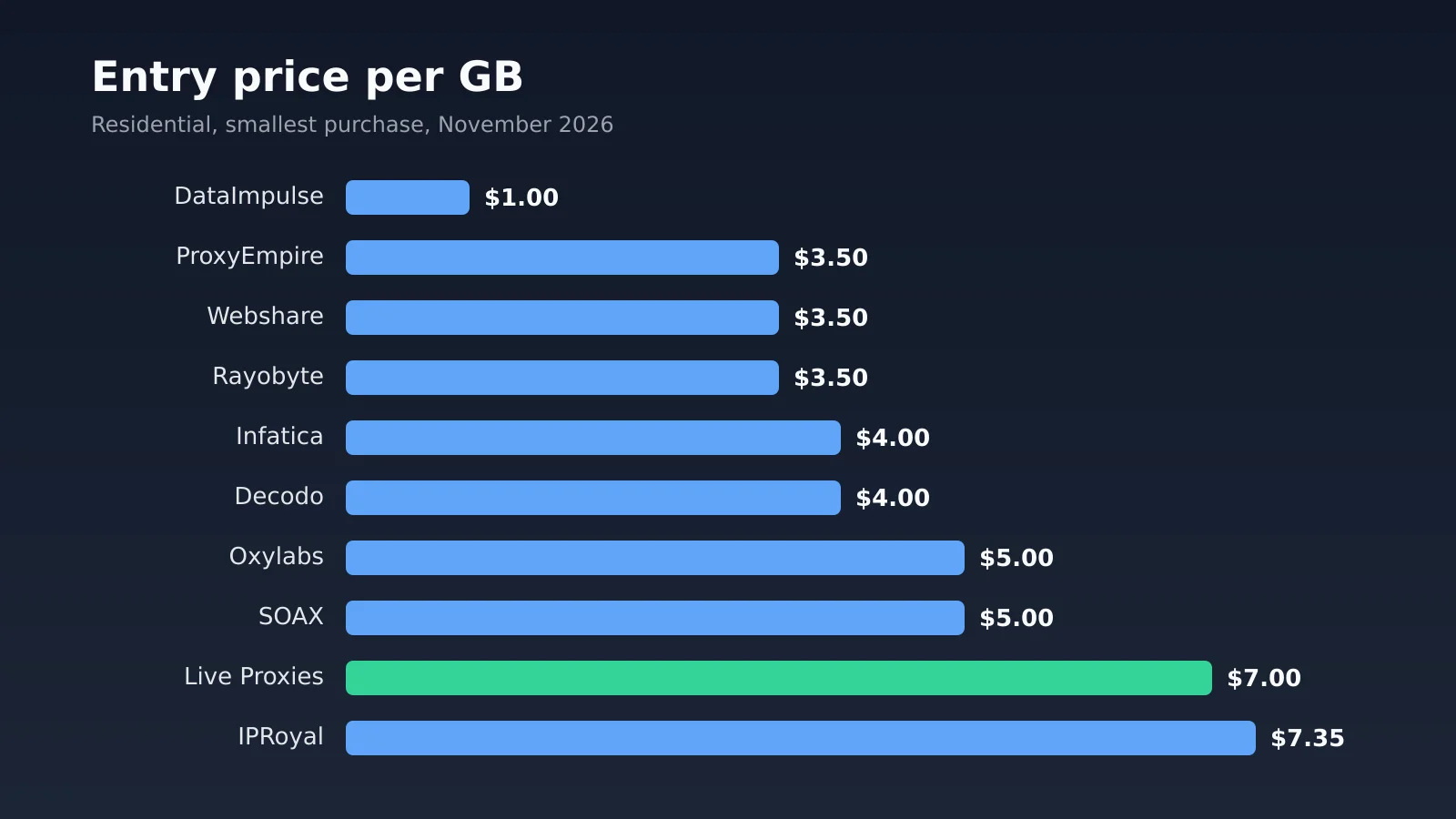 Residential entry price per GB, smallest purchase, November 2026.
Here is what stood out to us:
DataImpulse is the cheapest way in at $1/GB, and its traffic never expires, which suits irregular batch jobs.
Most providers sit between $3.50 and $5 per GB at the entry level, including ProxyEmpire, Webshare, Rayobyte, Infatica, Decodo, Oxylabs and SOAX. ProxyEmpire's $3.50 is a discounted price; its normal rate is $7/GB.
Live Proxies and IPRoyal cost the most to start, at about $7/GB. Live Proxies sells B2C traffic in private plans, and its B2B traffic drops as low as $1/GB at volume.
Volume changes the picture a lot. Rayobyte falls to $0.70/GB at 1,000 GB, Webshare to $1.40/GB at 3,000 GB, and Oxylabs to $2/GB at 1,250 GB.
Free ways to test differ. Webshare has a free plan, Rayobyte has a free trial with no card, Oxylabs gives $5 in credit, Decodo gives a 3-day trial with 100 MB, and SOAX has no free trial.
As we note in the DataImpulse section below, price per GB is not the same as price per finished task. A cheap GB that needs three retries can cost more than an expensive GB that works the first time, so test on your real targets before you commit to a large plan.
1. Live Proxies
 Live Proxies combines automatic rotation with persistent session control, allowing teams to adjust IP behavior to workload requirements. Its private residential proxy infrastructure includes millions of residential and mobile IPs across 50+ countries, with strong coverage in the US, Canada, and the UK. Location availability varies by plan. Country-, city-, and ASN-level targeting, HTTP/HTTPS and SOCKS5 support, unlimited threads, and target-level private allocation help manage recurring destinations and geographically distributed operations.
Residential sessions can retain the same IP for up to 60 minutes, and longer sessions can be discussed for eligible B2B deployments. Teams can implement rotating proxies based on task requirements, using fresh IPs for independent requests and stable connections for multi-step workflows. Different rotation policies can operate simultaneously across production workloads while maintaining target-level isolation.
Rotation Strategy: Independent jobs can rotate while related requests remain under one persistent session.
Workload Separation: Different targets and projects can use different session behavior instead of one universal policy.
Private Allocation: Target-level private assignment can reduce unrelated customer interference around recurring destinations.
Parallel Execution: Unlimited threads support many rotation-aware workers simultaneously.
Failure Analysis: Controlled assignments make it easier to isolate failures in IP, target, and application.
Main Trade-Off: Workloads requiring one permanently static identity may fit a dedicated or static proxy model better.
Starting Price: B2C rotating residential plans start from $45, which works out to about $7/GB. B2B traffic goes as low as $1/GB, with B2B plans from about $2,000 a month.
2. ProxyEmpire
 ProxyEmpire supports several rotation models across its residential and mobile infrastructure. Rotating Residential users can request a fresh IP on every connection, keep the same address for as long as the underlying peer remains available, or set a custom TTL of up to two hours.
This flexibility makes the provider useful for workflows that begin with broad discovery and then move into deeper verification. A project can use rapid rotation during the first stage and bind later requests to a session ID when continuity becomes more important than maximum IP diversity.
Discovery-to-Verification: Broad rotation can identify targets before sticky access preserves context for deeper checks.
Session Flexibility: Same-IP, per-request, and timed modes support several persistence requirements.
Manual Rotation: Individual sessions can be deliberately reset when a new identity is required.
International Use: Residential coverage supports recurring projects across many markets.
Parallel Workloads: Multiple independent session IDs can support concurrent tasks.
Main Trade-Off: Long sessions still depend on the residential peer remaining online.
Starting Price: Pay as you go is $3.50/GB with the current discount (normally $7/GB), and a small trial costs $1.97.
3. Webshare
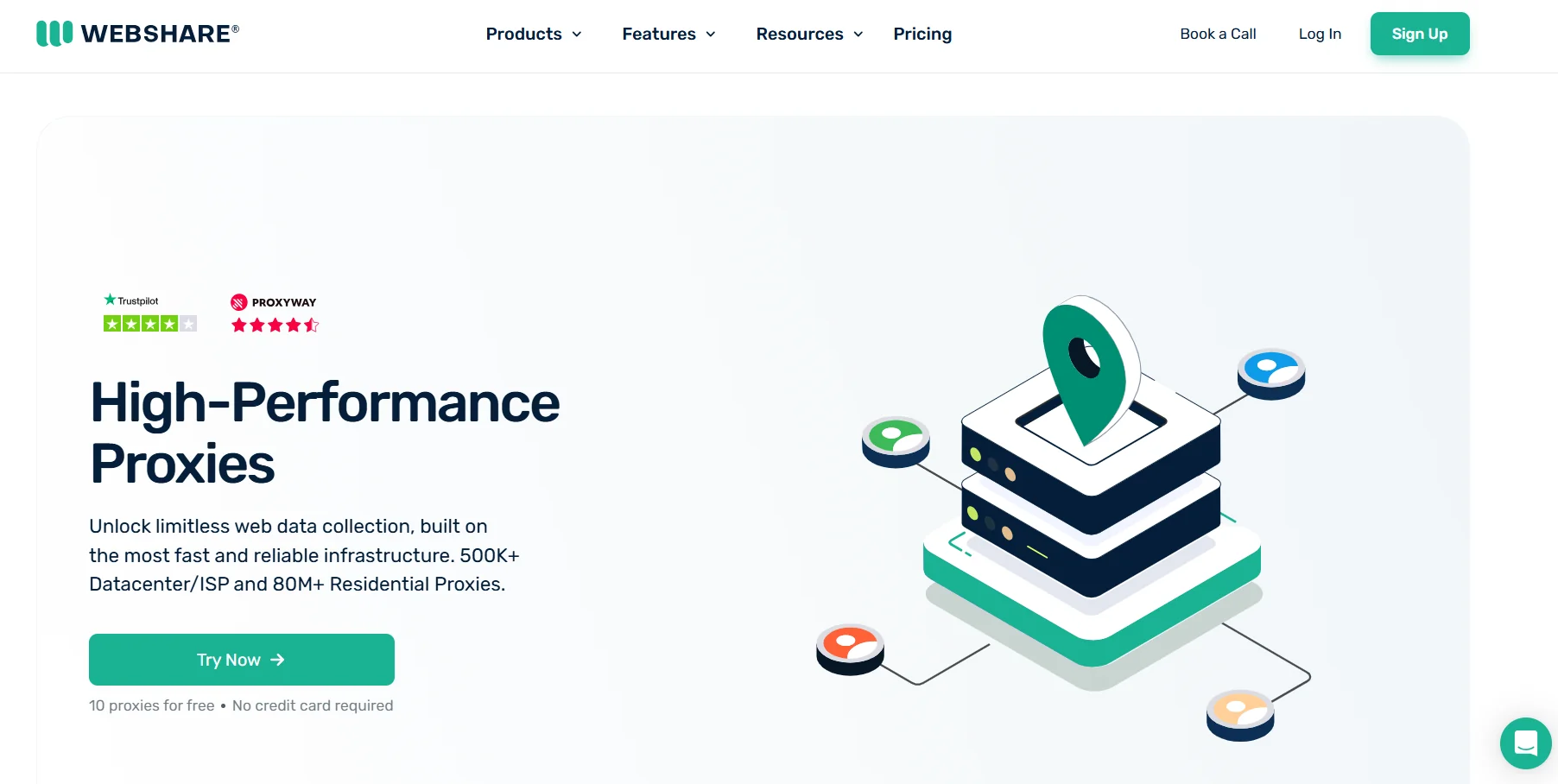 Webshare gives developer-managed teams direct control over rotating and sticky residential endpoints. Its Endpoint Generator allows users to choose session type, location, authentication method, and the number of endpoints, with sticky durations configurable from one minute to 24 hours.
The rotating residential gateway can assign a different IP on every request while the connection details stay consistent. Teams can therefore maintain separate endpoint configurations for scraping, monitoring, regional research, and workflows that require longer session continuity.
Endpoint Control: Different projects can receive independent rotating or sticky configurations.
Sticky Range: Session duration can be set from 1 minute to 24 hours.
Developer Fit: Endpoint generation integrates naturally with custom internal tooling.
Geo Precision: Rotating residential supports country, state, city, ZIP, and ASN targeting.
Experimentation: Several session durations can be tested against the same destination before production.
Main Trade-Off: More retry and session-management responsibility remains with the customer's application.
Starting Price: $3.50/GB on the 1 GB plan, falling to $1.40/GB at 3,000 GB. A free plan with 10 shared proxies lets you test the dashboard.
4. DataImpulse
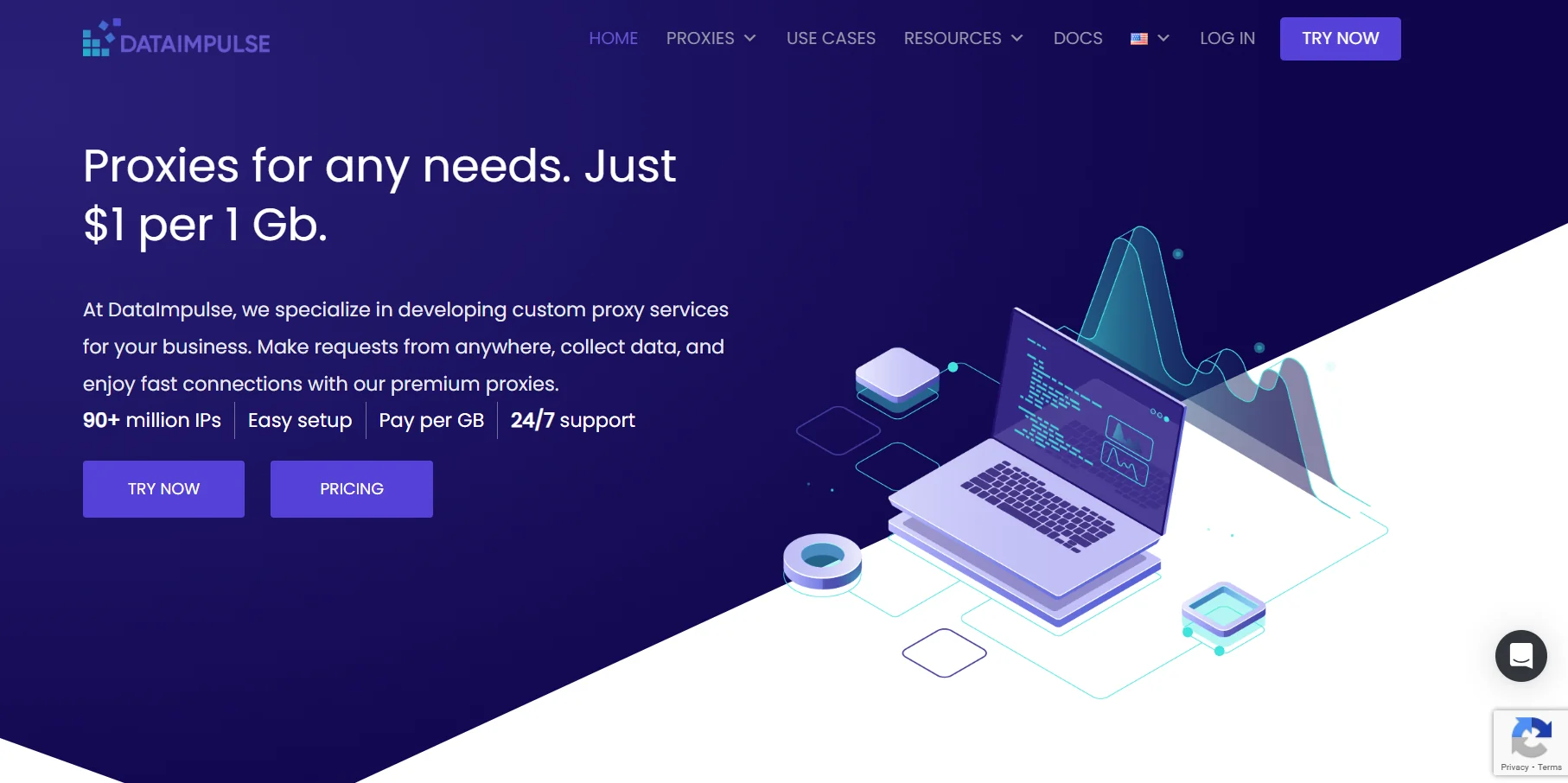 DataImpulse focuses on cost-efficient rotating residential traffic with pay-as-you-go consumption. Its residential network supports rotating sessions, sticky sessions, HTTP(S), SOCKS5, API access, and country targeting, making it practical for teams that need flexible traffic consumption rather than a large fixed commitment.
This model fits irregular workloads and large batches of independent tasks where teams want to test rotation strategies before scaling. It can also be useful during benchmarking because per-request and sticky approaches can be compared under the same traffic model.
Rotation Experimentation: Low entry costs make real-target testing less expensive.
Batch Workloads: Independent tasks can obtain fresh identities without reserving long-lived endpoints.
Irregular Jobs: PAYG traffic suits workloads that run periodically rather than continuously.
Cost Measurement: Teams can compare spend per completed task across different session strategies.
Scaling Path: Traffic commitments can grow after the most effective rotation policy is identified.
Main Trade-Off: Low cost per GB does not automatically produce the lowest cost per successful result.
Starting Price: From $1/GB on pay as you go, down to $0.80/GB at 1 TB, and traffic never expires.
5. SOAX
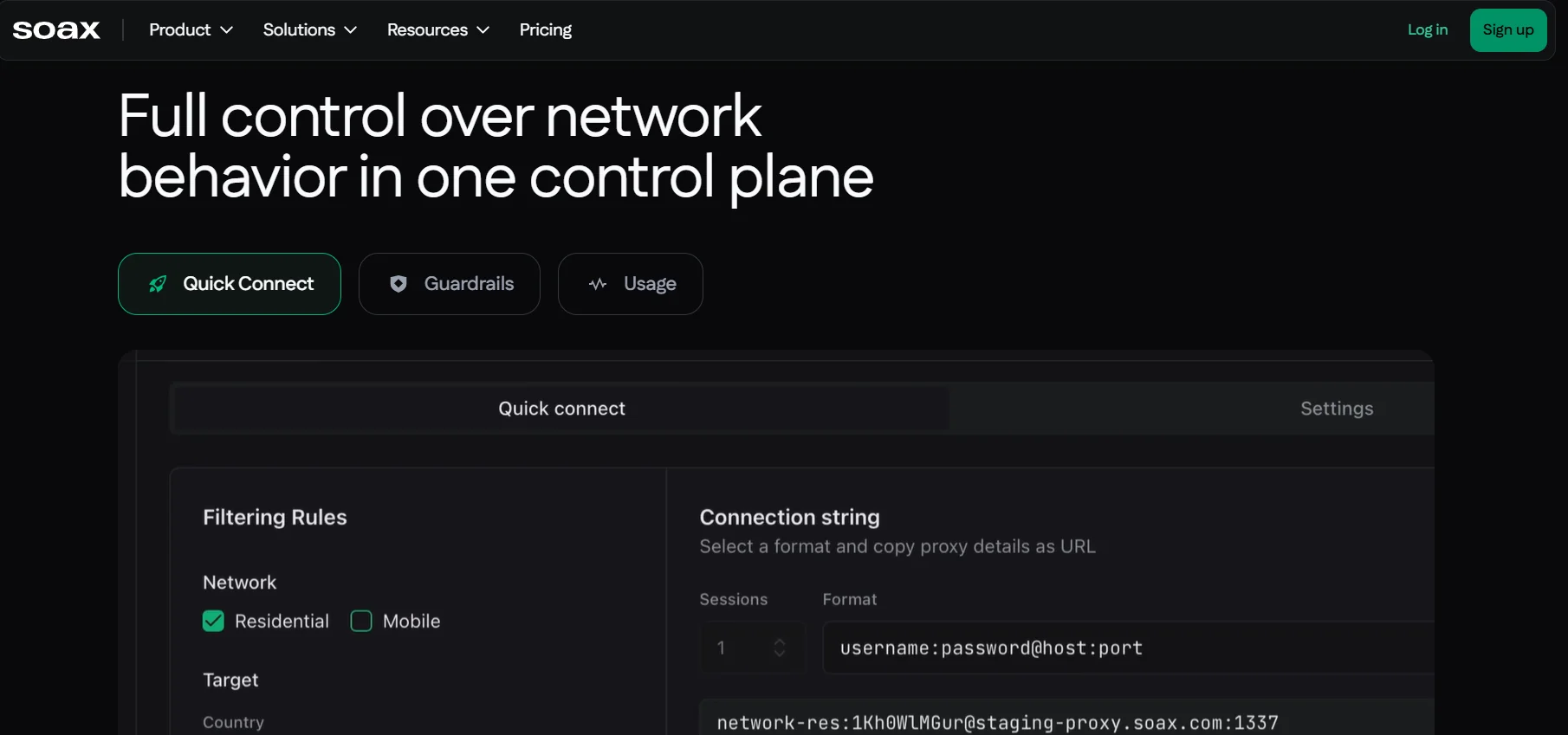 SOAX offers one of the more configurable approaches to rotation. Its platform can rotate per request, after a defined number of requests, after a time interval, or in response to an error, while sticky sessions can lock traffic to one node when continuity is required.
That flexibility becomes particularly useful when geography forms part of the dataset. Residential and mobile access can preserve a specific market context during a session and refresh the identity only at an intentional boundary.
Rotation Precision: Multiple triggers allow session behavior to match the actual workflow.
Geo Consistency: Market context can remain stable while the IP stays sticky.
Market Segmentation: Separate geographic datasets can use independent rotation policies.
Mobile Context: Mobile infrastructure supports workloads where carrier-origin traffic matters.
Controlled Experiments: Detailed routing makes it easier to test the effect of rotation itself.
Main Trade-Off: Advanced configuration can be unnecessary for simple high-churn workloads.
Starting Price: The no-subscription Sandbox costs $5/GB for Tier 1 countries such as the US, or $3/GB on the $200/month Builder plan. There is no free trial.
6. Rayobyte
Rayobyte supports per-request rotation as the default behavior on residential proxies and adds sticky and strict-sticky modes when continuity matters. A session ID ties related requests to one exit, while soft sticky sessions can replace the IP if the residential device disappears.
The broader architecture also includes rotating ISP and rotating datacenter products. This allows organizations to assign different network classes and rotation policies to different workload categories instead of routing every job through the same residential pool.
Network-Level Routing: Residential, ISP, and datacenter workloads can use different rotation strategies.
Per-Worker Sessions: Independent session IDs prevent concurrent workers from sharing one sticky exit.
Strict Stickiness: Residential workflows can prioritize identity continuity when replacing the IP would break the task.
Cost Control: More expensive residential traffic can remain reserved for destinations that benefit from it.
Architecture Flexibility: Rotating and persistent networks can coexist in one deployment.
Main Trade-Off: More network categories require clearer internal routing rules.
Starting Price: Premium Residential is $3.50/GB for 1 to 49 GB on pay as you go, falling to $0.70/GB at 1,000 GB, with a free trial and no card required.
7. IPRoyal
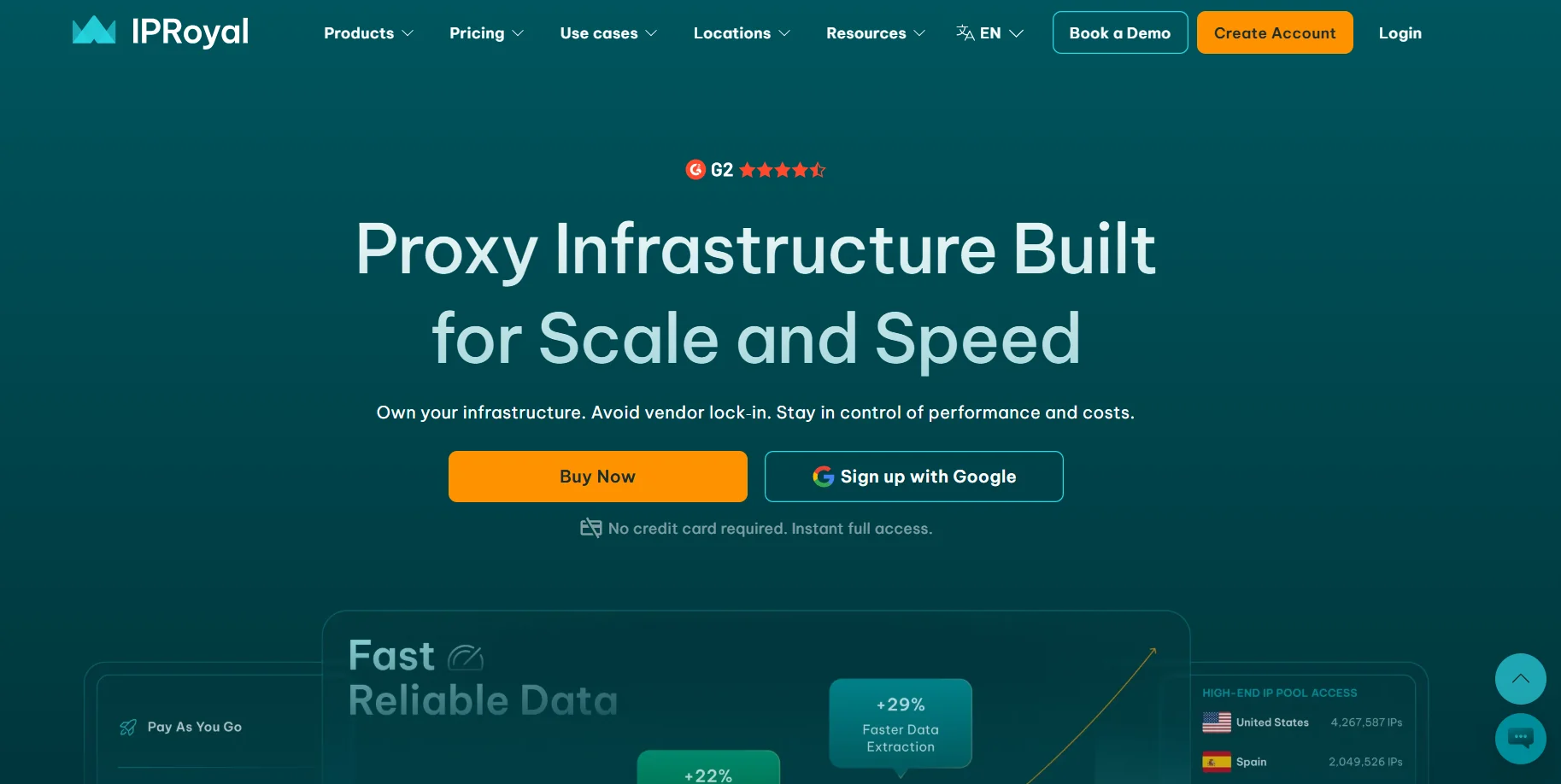 IPRoyal combines automatic per-request rotation with unusually long configurable sticky sessions. Its residential dashboard supports Randomize IP for a new address on every request or Sticky IP with TTL settings ranging from one second to seven days.
The seven-day value represents a requested session window rather than a guaranteed residential-peer lifetime. If the underlying device leaves the network earlier, the active IP may no longer remain available, so long workflows still need recovery logic.
Long-Task Continuity: Extended TTL settings support lengthy related request sequences.
Rotation Boundary Control: Teams can change identity between requests or preserve it across a larger task.
Persistent Research: Long sessions reduce unnecessary environmental changes during multi-page analysis.
Flexible Usage: The same network can support both sticky and high-rotation jobs.
Operational Simplicity: TTL configuration reduces the need for custom retention logic.
Main Trade-Off: Configured TTL cannot guarantee that the residential peer remains online throughout the period.
Starting Price: $7.35/GB for 1 GB on pay as you go ($7 on subscription), falling to $5.51/GB at 10 GB, and traffic does not expire.
8. Infatica
 Infatica provides explicit controls for per-request, timed, and sticky residential rotation. Its documentation lists timed periods from five to 60 minutes, rotation with each request, and sticky behavior, while noting that an unavailable proxy may be replaced earlier than the configured interval.
This predictable interval model fits recurring commercial pipelines where network behavior needs to remain standardized across scheduled runs. Detailed location filtering also allows rotation policies to be combined with geographic requirements.
Structured Rotation: Defined intervals create repeatable network behavior across recurring jobs.
Pipeline Integration: Rotation settings can become part of standardized automated collection workflows.
Target Segmentation: Different destination groups can use different session policies.
Geo Control: Detailed location filters can preserve market context while IPs rotate.
Operational Consistency: Timed behavior makes repeated runs easier to compare.
Main Trade-Off: Target-specific benchmarking is still necessary because configured timing alone does not determine performance.
Starting Price: $4/GB on pay as you go or 25 GB for $96, with a 7-day trial for $4.
9. Oxylabs
 Oxylabs supports rotating and sticky session control across several network products, including residential and mobile proxies. Session IDs can preserve one exit across multiple requests, while rotating endpoints provide fresh identities for distributed workloads.
The provider is particularly relevant to larger deployments that need several network types and many independent worker sessions under centralized infrastructure. Session control can be combined with detailed geographic routing and enterprise-oriented management for production-scale systems.
Production Rotation: Session policies can be incorporated into recurring business-critical pipelines.
Large Worker Fleets: Independent session identities support highly parallel workloads.
Multiple Network Types: Residential, mobile, ISP, and datacenter products can serve different task classes.
Centralized Control: Larger teams can standardize routing policies across shared infrastructure.
Expansion Value: The platform can support workloads that add more destinations and workers over time.
Main Trade-Off: Its infrastructure depth can exceed the requirements of smaller rotation-only projects.
Starting Price: $5/GB for the first GB, falling to $2/GB at 1,250 GB and above, plus $5 in welcome credit for new accounts.
10. Decodo
 Decodo supports rotating and sticky behavior across residential infrastructure and exposes rotation controls through its dashboard and API. Rotating sessions can assign a new IP on every request, while sticky sessions can preserve one identity for defined periods, including extended custom intervals.
Its broader network also includes residential, mobile, ISP, and datacenter products, allowing separate workload queues to use different network types and session rules without moving to another provider.
Rotation Variety: Separate queues can use different sticky and rotating behaviors.
Automation Fit: Dashboard and API configuration suit recurring automated pipelines.
Testing Value: Teams can compare per-request and persistent strategies against the same targets.
Geo Routing: Detailed targeting supports rotation inside defined market boundaries.
Expansion Path: Workloads can grow from a few jobs into larger distributed systems.
Main Trade-Off: Extensive configuration can be unnecessary for simple request-by-request scraping.
Starting Price: $4/GB on pay as you go, with a 3-day trial that includes 100 MB.
How Do You Prevent IP Reuse From Weakening Rotation?
Rotation frequency and IP diversity are different metrics. A gateway can technically assign a new address on every request while still cycling repeatedly through a relatively concentrated subset of the available pool.
Track Unique Exit Diversity
The unique IP ratio compares the number of distinct exit addresses with the total number of requests and shows whether frequent rotation is actually producing meaningful diversity. Recording repeat assignments over time also reveals whether a small number of addresses are appearing disproportionately often despite nominal request-level rotation.
Measure Reuse Across Targets
IP reuse matters most when the same addresses repeatedly return to sensitive or high-volume destinations. Separating pools by target can reduce reputation overlap and make it easier to identify whether concentrated reuse is affecting one workload rather than the entire deployment.
Check Session and Geo Constraints
Sticky session identifiers and narrow geographic filters can both reduce the number of exits available to the rotation engine. Teams need to confirm that supposed rotating jobs are not accidentally retaining sticky identities and that city-, ZIP-, ISP-, or ASN-level targeting is not shrinking the usable pool more than expected.
How Can Geo Targeting Change Rotation Quality?
Every geographic restriction reduces the candidate set from which the rotation engine can select the next exit. More precise targeting can improve location relevance while simultaneously increasing reuse and reducing the number of available alternatives.
Broad Geographic Selection: Country-level or unrestricted routing usually provides a larger pool and greater exit diversity.
City-Level Targeting: Narrow city filters can increase the chance that recently used IPs reappear.
ZIP-Level Routing: Very small geographic areas may contain substantially fewer eligible residential exits.
ISP or ASN Targeting: Restricting traffic to specific networks can reduce diversity even when the wider country pool is large.
Peak-Hour Availability: Local peer availability can change throughout the day and affect how many exits the rotation engine can use.
Availability Testing: Narrow markets need production-volume testing to determine whether targeting precision creates excessive reuse.
Geo precision therefore needs to be balanced against the amount of IP diversity the workload actually requires.
What Happens When Rotation and Retry Logic Conflict?
Retry behavior becomes more complicated when a failed request automatically triggers a new proxy identity. The application may believe it is repeating the same operation, while location, network reputation, or session context has already changed underneath it.
Retry With the Same Identity
Keeping the original IP is usually the safer first step when session state matters and the failure may be temporary. This preserves cookies, geographic context, authentication state, and the same network conditions, making it easier to determine whether the original failure was transient rather than identity-specific.
Retry With a Fresh Identity
A fresh IP becomes more appropriate when the address itself is a plausible cause of failure and the request does not depend on persistent state. Independent public-data requests can often rotate safely, but the replacement identity still needs to inherit the required geographic and routing constraints.
Protect Against Duplicate State Changes
Retries involving forms, carts, submissions, or other state-changing actions need additional safeguards because the first request may have succeeded even if its response was lost. Recording confirmed outcomes before rotating or retrying prevents the application from repeating an action simply because the network connection failed afterward.
Which Metrics Actually Measure Rotation Quality?
A claim such as "new IP per request" describes rotation frequency, but it does not show whether the resulting exits are diverse, correctly located, or reliable in real workloads. A stronger evaluation also looks at IP reuse, session stability, retry behavior, geo accuracy, and completed-task performance to determine whether the rotation engine actually improves results.
Unique IP Ratio: Measures how many distinct exits appear relative to the total number of requests.
IP Reuse Rate: Shows how frequently recently used addresses return to the workload.
Session Survival: Tracks whether sticky identities remain available for the intended task duration.
Retry and Block Rates: Reveal how often network or destination failures interrupt otherwise valid jobs.
Geo Accuracy: Confirms that replacement exits continue to match the requested location.
Completed-Task Rate: Measures whether the full rotation strategy helps real workloads finish successfully.
A strong rotation engine therefore needs to produce useful, diverse, correctly located exits without breaking the workload that requested them.
How Do You Test a Rotation Engine Before Scaling?
A useful rotation test needs to reproduce production targets, geographic filters, concurrency, and session behavior. Basic connectivity tests can show that a gateway works, but they say little about reuse, persistence, or performance once many workers begin rotating simultaneously.
Compare Per-Request and Sticky Modes
Run equivalent workloads through both rotation models while logging every exit IP. Compare unique IP ratios, repeated assignments, request failures, session survival, and completed tasks so the decision is based on workload performance rather than assumptions about which mode rotates more aggressively.
Test Geography Under Load
Repeat the benchmark across all important locations and increase worker concurrency to realistic levels. Broad country pools may remain diverse under load, while city-, ZIP-, or ISP-level filters can show much higher reuse once many parallel sessions compete for a smaller candidate set.
Measure Cost per Completed Task
Bandwidth price alone does not reveal the real economics of a rotation engine. Include retries, blocked requests, failed sessions, replacement traffic, and incomplete jobs so the final metric reflects how much network spend is required to produce a usable result.
When Is Rotation the Wrong Proxy Strategy?
Some workloads depend more on network continuity than on frequent identity changes. In these cases, aggressive rotation can introduce instability without providing a meaningful operational advantage.
Long Authenticated Sessions: Changing IP during an active authorized session can alter or disrupt the established environment.
IP-Allowlisted Systems: Destinations that permit only known source addresses require a stable identity.
Persistent Forms and Carts: Multi-step state can become inconsistent when the IP changes before the workflow is complete.
Stable Account Environments: Long-running account contexts benefit from predictable network conditions.
Controlled QA: Reproducing the same test requires network variables to remain consistent across runs.
Long Browser Sequences: Complex navigation usually works better with a static endpoint or carefully controlled sticky session.
In these cases, static ISP proxies, dedicated endpoints, or longer sticky sessions can be more appropriate than continuous rotation.
How Do You Design Rotation Policies by Workload?
One universal rotation timer rarely works well across scraping, monitoring, browser automation, AI agents, and social research. The better approach is to define the rotation boundary according to what counts as one complete task for each workload.
Web Scraping
Independent public-page collection generally fits per-request rotation or short sessions because each URL can be processed without relying on state created earlier. High exit diversity and retry-aware replacement matter more here than preserving the same identity for long periods.
SERP Monitoring
Search monitoring needs multiple exits without losing geographic consistency. Each market can use its own pool so IPs rotate inside the intended country or city while repeated observations remain comparable over time.
Price Monitoring
Independent products can rotate between tasks, but related product, availability, and checkout pages may need one identity until the observation is complete. Preserving geographic context is also important when pricing or inventory changes by location.
AI Agents
Multi-step agents benefit from keeping one network identity throughout an execution path and rotating between independent runs. Proxy state needs to remain aligned with browser state, task memory, and retry logic so the agent does not continue reasoning from an environment that has already changed.
Social Media Research
Public social research can rotate between unrelated discovery jobs while maintaining a stable browser and market context during deeper investigations. Separate platforms and geographic markets can also use distinct session policies to prevent one research environment from influencing another.
Conclusion
The best rotating proxy provider is not simply the service that changes IP addresses most often. Strong rotation depends on when identities change, how long they remain available, how diverse the replacement exits are, and whether geographic and session behavior stay predictable under real workloads.
Teams get better results when they choose rotation cadence around task boundaries, measure unique exits instead of trusting rotation claims alone, coordinate retry logic with session identity, and use sticky access whenever continuity matters. Testing the actual rotation engine against production targets remains the most reliable way to determine which provider and session policy fit a workload before scaling.
FAQs
What is a rotating proxy?
A rotating proxy keeps your app connected to one gateway address while the exit IP behind it changes. Depending on the settings, the IP can change on every request, after a set time, or when you end the session.
How much do rotating proxies cost?
Residential rotating proxies usually cost between $1 and $7 per GB at the smallest purchase, based on the pricing pages we checked in November 2026. The price per GB drops with volume, and some providers go below $1/GB on large plans.
What is the difference between a rotating and a sticky proxy?
A rotating proxy gives you a new IP on each request or after a set time. A sticky proxy keeps the same IP for a session, from a few minutes up to 24 hours or more, so multi-step tasks like logins and carts do not break.
How long can a sticky session last?
It depends on the provider. Live Proxies offers up to 60 minutes on standard residential plans, Decodo and Oxylabs allow up to 24 hours, and IPRoyal lets you request up to 7 days. Long sessions still end early if the residential device goes offline.
Do I need proxies, or can I use an API instead?
If the data you need is already sold through an API, that is often simpler and more stable than collecting it yourself. For example, our guide to the Similarweb API covers what you get for website traffic data. Proxies make more sense when no API covers your target or when you need location-specific results.