


I read about nine articles answering this question before I started writing my own. Every one of them said yes, Tomoson is legit, pasted in a few bad reviews, and finished. Not one of them looked like it had opened the terms page.
So that is where I went. Pricing page, terms and conditions, brand FAQ, influencer FAQ, on August 25, 2026, reading properly rather than skimming.
Four things in there changed my answer. I have not seen any of them mentioned anywhere else on this search.
The Short Answer
Yes, Tomoson is legit. Real company, running since 2013, live pricing page with five tiers, real payments moving through it. Nobody is harvesting your card details.
That is not the same as saying it is good. On the review aggregators it sits at roughly one and a half stars, and the same three complaints come up over and over: support that does not reply, creator metrics that turn out to be inflated, payments that arrive late. Those are user reports, not verified facts, and angry people write more reviews than happy ones. But when a complaint repeats across separate sites for years you stop treating it as noise.
Anyway, the documents are the interesting part. Let me start with money.
What It Costs, Before Anything Else Costs Anything
Straight from the pricing page:
Plan | Price | Active campaigns | People hired per month | Team members |
|---|---|---|---|---|
Basic | $49/mo | 1 | 25 | 1 |
Starter | $99/mo | 10 | 100 | 3 |
Business | $199/mo | 30 | 300 | 5 |
Agency | $399/mo | 100 | 1,000 | 10 |
Scale | $599/mo | 100 | 3,500 | 20 |
Twenty one day free trial. Influencers pay nothing.
Business is the one Tomoson flags as most popular, so call it $2,388 a year. And then read Tomoson's own brand FAQ, which tells you that when you work out your marketing budget you also need to include the product, the shipping, and whatever you pay the influencers.
So $2,388 is what you have spent before one box leaves your warehouse.
Small brands, do the full sum before you sign up. The subscription is the cheapest thing in it.
The Reach Number Is Not What You Think
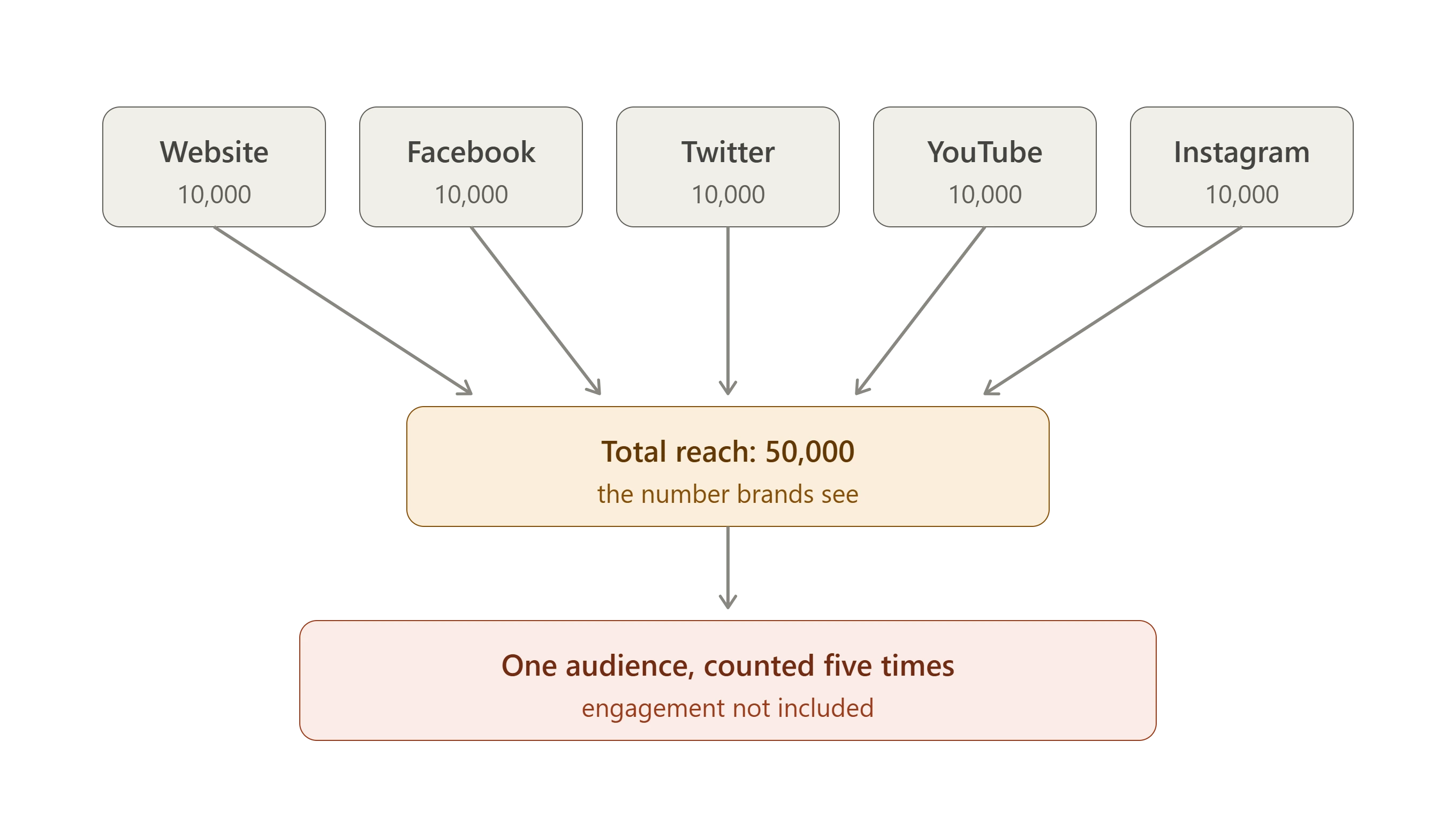 This is the finding that changed how I read every complaint about the platform.
Tomoson's brand FAQ defines Total Reach as website visitors plus Facebook friends and likes plus Twitter followers plus YouTube subscribers plus Instagram followers.
Added together. All of it. One number.
Someone with ten thousand followers on five channels shows up with a Total Reach of fifty thousand, even when it is broadly the same people following them in five places, and even if not one of them ever comments on anything.
Which means the brands complaining that Tomoson creators have fake-looking numbers are, at least in part, complaining about a figure the platform's own maths produces. Nobody faked anything. The definition did the work.
If you are a brand, ignore that number completely. Ask for each platform separately and then go and look at engagement on recent posts yourself. If you are a creator, this is probably why a brand approved you and then acted disappointed.
Their FTC Instructions Are Three Years Out of Date
Tomoson's terms tell influencers to follow the FTC's 2009 endorsement guidelines and its 2013 disclosure guidance.
The FTC rewrote the Endorsement Guides in 2023.
That rewrite is not cosmetic. It added a definition of what "clear and conspicuous" actually means, said a platform's built-in sponsored tag might not be enough on its own, widened what counts as an endorsement, and spelled out that advertisers, endorsers and intermediaries can all carry liability.
I read the clause twice to be sure I had it right. The compliance instruction sitting on the platform points creators at rules that have since been replaced.
To be fair about what I am and am not saying: this looks like a page nobody has updated, not evidence that Tomoson wants people breaking the rules. There is a related oddity in the same terms, which is that creators are told to disclose that they received a free product but told not to mention Tomoson by name. I have no idea why.
Either way, if you are treating the platform's terms as your compliance checklist, stop. The actual rules are on the FTC's endorsements and influencers page and they take ten minutes to read. Short version: a free or discounted product counts as a material connection, you have to disclose it, the disclosure goes with the post rather than on your profile or under a "more" link, and it is your responsibility rather than the brand's.
Suspensions Are Final
The influencer FAQ lists what gets you removed. Threatening messages, spam, messages that have nothing to do with a campaign, generally unprofessional behaviour, connected accounts under the follower minimum, zero reach or engagement. Selling a product you were sent to review instead of reviewing it also counts, since products are provided for testing only.
Then comes the line that matters. Suspensions are final, at Tomoson's sole discretion. There is no appeal process described anywhere on the site that I could find.
Brands get their own list. One free trial per brand, ten campaigns maximum during it, and opening a second account or going over ten campaigns is grounds for suspension. Using the message centre to pitch creators about anything other than a live campaign can also do it.
Several of the negative reviews I read described accounts being locked mid campaign. Whatever happened in those specific cases, the terms make clear that outcome is contemplated and that there is no stated way back. Keep your creator contacts somewhere that is not Tomoson.
The Guarantee Is Real, and Narrow
Tomoson offers a Send Your Product Guarantee. If you are unhappy with the exposure, it reimburses the product and the shipping.
Three conditions sit in the terms, and you want to know all three going in.
It only covers your first promotion on the platform.
You have to claim between 40 and 55 days after you ship. Claim earlier and Tomoson says you have not given it time to run. Claim later and it says you were not paying attention.
And you cannot claim because a review was negative. Tomoson points at FTC guidelines for that one, which is fair enough, since paying to make bad reviews go away is precisely what the rules exist to stop.
Practical upshot: if you are going to test the platform, make your first campaign the one you actually care about, and put the claim window in your calendar the day the box goes out.
What I Could Not Check
The gaps matter as much as the findings, so here they are.
The payment delays. Reports of thirty to sixty day waits show up across review sites and I cannot confirm any of them from a primary source. Reported experience, not fact.
The 80,000 plus influencers. That figure comes from the brand FAQ and there is no independent audit of it I could find.
Data export. I could not find any documented export or API. If you leave, assume you are copying contacts out by hand.
Support response times. Testing that properly means being a paying customer with a live problem, which I am not.
One smaller thing I noticed. The pricing page carries a modified date of March 2025, so those prices have sat untouched for about eighteen months. That is not evidence of anything by itself. It is just worth knowing that you are looking at a page nobody has felt the need to revise.
So, Is It Safe for Influencers?
It costs you nothing, which removes the risk people usually worry about on marketplaces.
What you are actually exposed to is time spent on applications that go nowhere, the disclosure obligation that arrives with every free product, and an account that can end at someone else's discretion.
One point in the platform's favour, and it surprised me: the terms say a creator who receives a free product is not obliged to review it. That is more generous than most people assume. I would not make a habit of it, obviously.
And for Brands?
This is where the money sits, and where most of the anger in those reviews comes from.
You pay before any content exists. You pick creators using a reach figure that overstates them. You ship real product. And when something breaks, the recurring complaint is silence.
There is an escrow system mentioned in the terms for paid work. Use it rather than paying people directly.
One more thing worth flagging. The brand FAQ says you can run campaigns asking for reviews on third party sites and names Goodreads, Etsy, Home Depot and Sears. Amazon is not on that list, and it should not be, because incentivised reviews break Amazon's own rules. If that is what you came here for, the answer is to stop doing it rather than to find a platform that lets you.
The Question That Actually Protects You
Tomoson matches brands and creators and then mostly gets out of the way.
Which means the platform being real tells you very little about whether the brand advertising on it will ship, pay, or behave like an adult. In any marketplace the risk sits with the person on the other end, not the marketplace.
So the question is not whether Tomoson is legit. It is whether this particular campaign, from this particular brand, is worth your time and your product. That is a question you answer per deal, and it is the step nearly everybody skips.
Questions People Actually Ask
Is Tomoson a scam?
No. Real company, real payments, thirteen years of operating. Bad reviews are not fraud.
Is it legit for brands?
Real, but you carry the cost and the risk. Vet people yourself and ignore Total Reach.
Does Tomoson actually pay?
On paid campaigns, after the brand approves your content. Delays are widely reported and I could not verify them.
Are the products really free?
Mostly. Some are heavily discounted instead. Each campaign says which, so read it.
Can you make money on it?
A little. It is better for building a portfolio than for paying rent.
What does it cost?
$49 to $599 a month across five brand tiers, free for influencers, 21 day trial. Checked on the pricing page on August 25, 2026.
Is it still running in 2026?
Yes, though the pricing page has not been updated since March 2025.
What are the real risks?
Reach figures that overstate creators, support that goes quiet, late payments, accounts closed with no appeal, and a disclosure obligation the platform's own terms describe using rules that no longer apply.
Where I Would Start
Creators: join. It is free, the product is usually genuinely free, and having a few published campaigns to show is worth something. Read every brief before applying, keep the conversation on the platform, and get your disclosure wording from the FTC rather than from Tomoson.
Brands: one campaign on Basic. Vet everyone by hand. Ignore Total Reach. Diarise the guarantee window. Call it an experiment, not a channel.
And if it does turn into a channel, you will hit the ceiling on analytics fast. I went through the realistic replacements and what they actually charge in this piece on Tomoson alternatives.
Every price, plan name and policy above came from Tomoson's own pricing page, terms and conditions, brand FAQ and influencer FAQ, read directly on August 25, 2026.