


Tomoson is an influencer marketing platform that connects brands with creators for product reviews and seeding campaigns, built around a marketplace model suited to small and mid sized ecommerce sellers.
Most people searching for Tomoson alternatives are not leaving because it costs too much. They are leaving because they have outgrown it.
That distinction matters more than any feature table, and almost every list on this topic ignores it.
Here is the problem. Tomoson sits at the budget end of this market. Yet the platforms most often recommended as replacements start around $2,000 a month on annual contracts with twelve month minimums.
So a brand outgrowing a freemium tool gets pointed at software costing twenty times more than it needs. This guide fixes that by grouping the fifteen alternatives by what they actually cost and who they actually fit.
What Is Tomoson?
Tomoson is a long running influencer marketing and product testing platform. Brands list a campaign, creators apply, and the platform handles messaging, approvals and basic reporting in one place.
Tomoson's own brand FAQ claims a network of over 80,000 creators, which is modest next to the databases newer platforms advertise, but it is opt in rather than scraped. Creators there actively want product collaborations.
Typical users: small to mid sized ecommerce brands, Amazon sellers, consumer product companies and marketers who want a marketplace rather than a managed service.
Strengths: simple campaign setup, fast time to launch, low cost entry starting at $49 a month with a 21 day trial, and a workflow built specifically around product reviews and seeding.
Limitations: a dated interface, shallow analytics, limited integrations, and a reach metric that adds every connected platform together, which overstates how large a creator actually is.
Why Brands Look for a Tomoson Alternative
The reasons cluster into five patterns, and knowing which one applies to you narrows this list fast.
You need a bigger creator pool. Ninety thousand creators is fine for broad consumer products and thin for niche categories. Discovery focused platforms index hundreds of millions of profiles.
You need real attribution. Tomoson tracks campaign activity. It does not tie a creator to a specific sale. Once you are spending seriously, you need to know which creator drove revenue.
You need ecommerce integration. Native Shopify or WooCommerce connection, discount code generation and sales tracking are standard elsewhere and absent here.
You need fraud detection. Vetting audience quality and spotting purchased followers is a specialist capability that basic marketplaces do not offer.
You have outgrown the interface. Managing dozens of concurrent campaigns needs a CRM, pipeline stages and automation rather than a list of applicants.
The Trap Almost Every List Walks Into
Before the platforms, the thing that costs people the most money.
Influencer software splits into four price tiers, and they are separated by an order of magnitude rather than by a few dollars.
First, where Tomoson itself sits, because you cannot pick a tier without knowing which one you are already in.
Tomoson publishes five brand plans: Basic at $49 a month, Starter at $99, Business at $199, Agency at $399 and Scale at $599, with a 21 day trial. Business is the tier it marks as most popular, so call your current spend $2,388 a year.
Now look at what gets recommended as a replacement. GRIN at roughly $2,200 a month is eleven times that. Traackr at $25,000 a year is ten times it again.
Tier | Monthly cost | Examples | Contract |
|---|---|---|---|
Marketplace | Free to about $299 | Collabstr, Afluencer | Pay per project |
Budget | About $89 to $199 | Heepsy, Modash, Influencity | Monthly available |
Mid market | About $300 to $600 | HypeAuditor, Upfluence entry | Often annual |
Enterprise | $2,000 to $5,000 plus | GRIN, Aspire, CreatorIQ, Traackr | 12 month minimum |
Traackr sits at the top of that range, with annual contracts commonly reported between $25,000 and $55,000.
The mistake is treating these as competitors. They are not. A brand running $30,000 of influencer spend a year does not belong on a platform costing $30,000 a year to operate.
Match the tier to the budget it manages, not to the feature list that impresses you in a demo.
I used the same framework comparing construction software alternatives, where the pricing model mattered more than any capability list.
Quick Comparison
Platform | Best for | Free trial | Starting price |
|---|---|---|---|
Tomoson (current) | Product seeding for small sellers | 21 days | $49 to $599/mo |
Collabstr | Booking creators directly | Free browsing | Free, pay per project |
Afluencer | Small brand creator matching | Free tier | Low cost tiers |
Heepsy | Affordable discovery | Free tier | $89/mo |
Modash | Largest creator database | 14 days | Around $99 to $299/mo |
Influencity | All in one at mid market price | Yes | Around $168 to $348/mo |
HypeAuditor | Fraud and audience vetting | Free version | Around $299/mo |
Upfluence | Discovery with deep filters | Demo only | Around $478/mo annual |
Aspire | UGC and marketplace outreach | Demo only | Around $500 to $2,499/mo |
Insense | UGC for paid social | Demo only | Quote based |
Later Influence | Social first marketing teams | Demo only | Quote based |
Club (ex Brandbassador) | Ambassador communities | Demo only | Quote, around $2,000/mo |
GRIN | Ecommerce product seeding at scale | Yes | Quote, around $2,200/mo |
Impact.com | Affiliate and partnership scale | Demo only | Quote based |
CreatorIQ | Enterprise multi brand programs | Demo only | Around $2,350/mo |
Traackr | Enterprise data and strategy | Demo only | $25,000 to $55,000/yr |
Pricing moves constantly and most enterprise vendors quote privately. Nine of these sixteen publish no pricing at all. Treat these as orientation rather than a quote.
Best Tomoson Alternatives for Small Brands
These sit closest to Tomoson's price point and model, which makes them the realistic first stop.
1. Collabstr
Best for: brands that want to book a creator this week without a subscription.
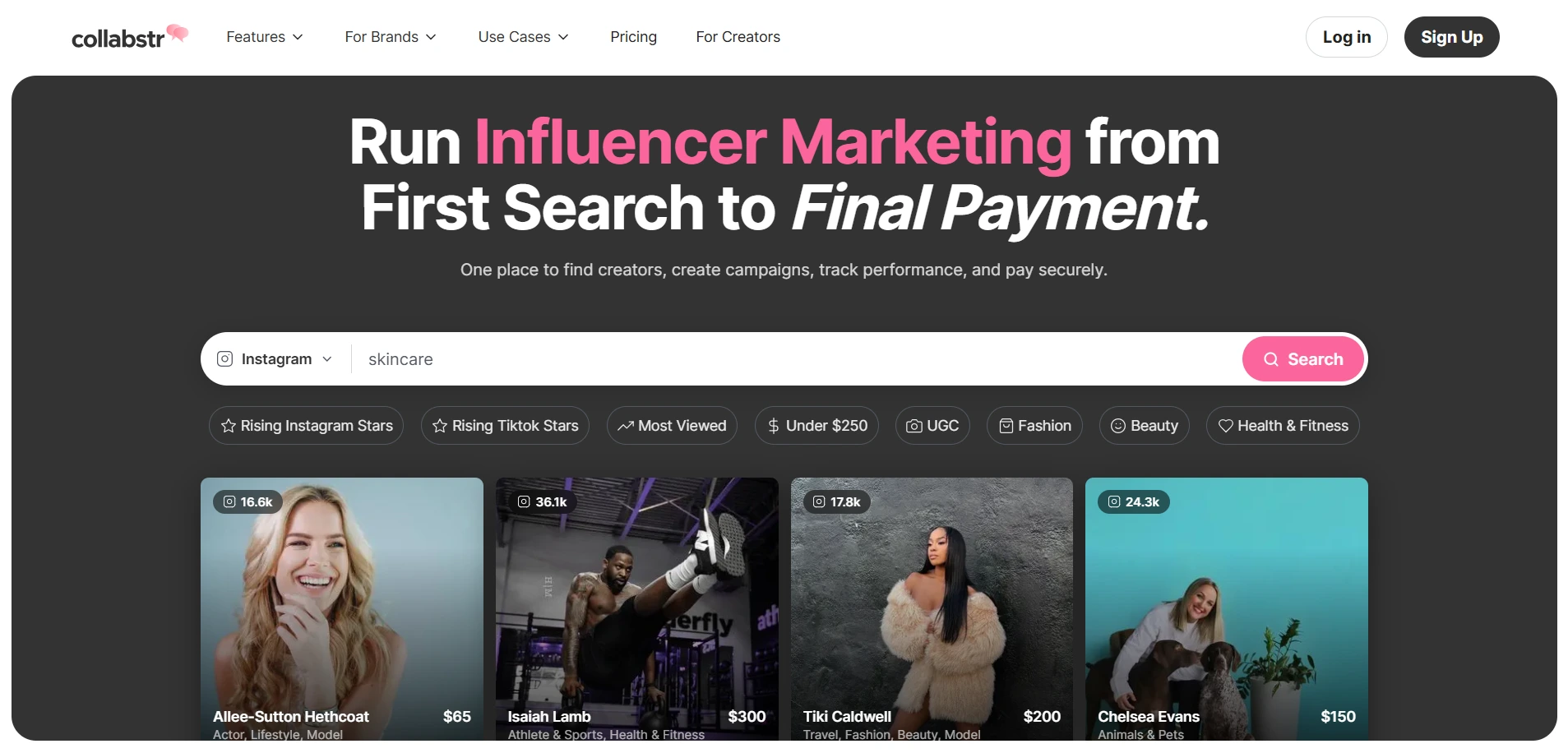 Collabstr works like a marketplace. You browse creator listings, see their rates upfront, and buy specific deliverables such as a TikTok video or an Instagram post.
Pros
No monthly subscription for basic use, so there is no financial risk before you validate the channel.
Escrow payments held until you approve the content, which protects both sides.
Rates are visible before you contact anyone, removing the negotiation round.
Cons
Limited analytics and no meaningful audience authenticity tooling.
Built for one off purchases rather than ongoing relationship management.
Who should not use this: brands running continuous ambassador programs. The transactional model works against long term partnerships.
Pricing: free to browse and buy per project, with paid tiers reported around $299 a month for brands wanting more.
2. Afluencer
Best for: small brands and startups wanting creator matching without enterprise overhead.
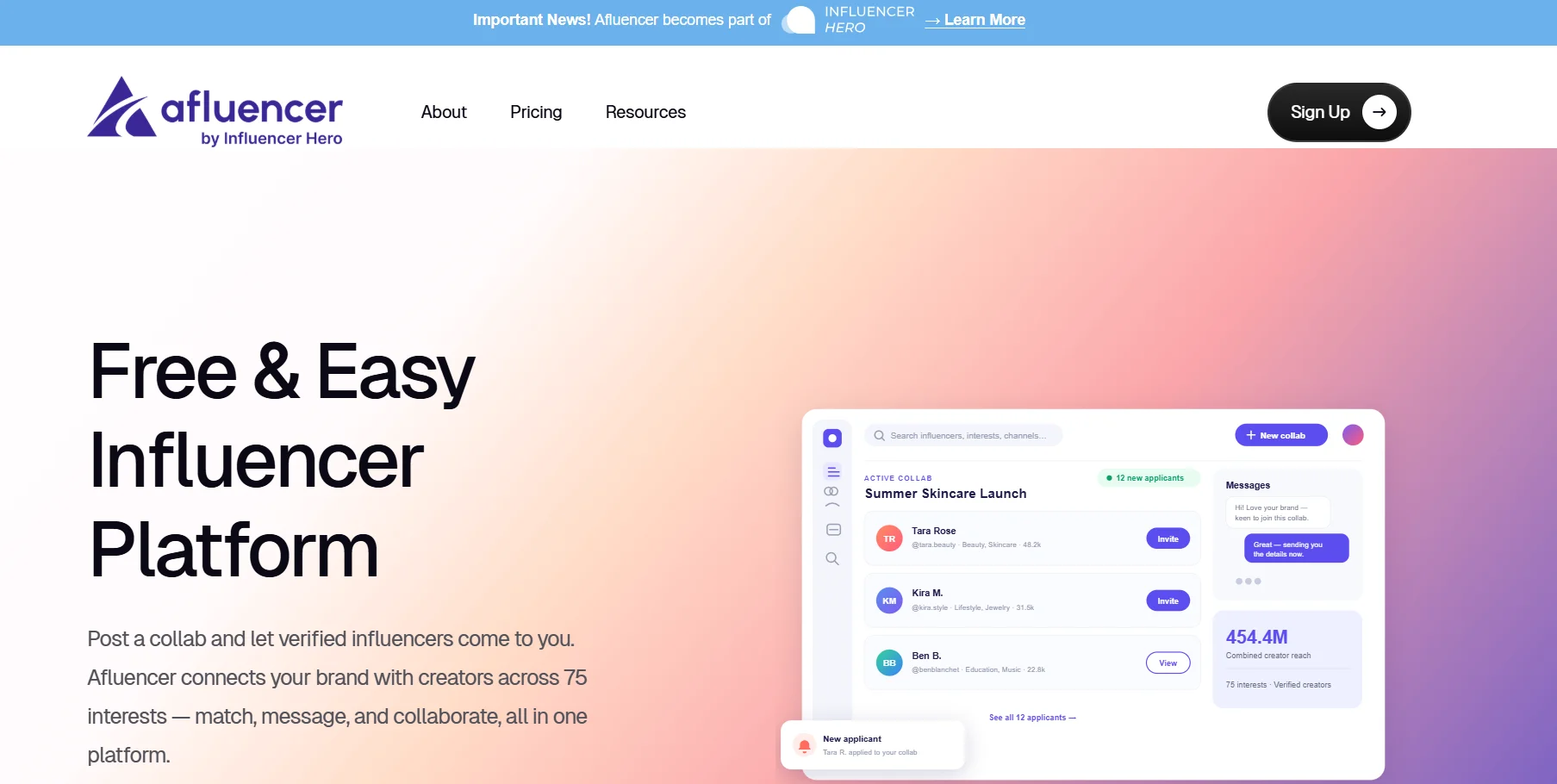 Afluencer runs a matching model where brands post collaborations and creators apply, which is conceptually the closest thing here to how Tomoson works.
Pros
Very low cost entry, which suits brands testing the channel for the first time.
Creators opt in and apply, so outreach is warmer than cold discovery.
Simple enough to run without a dedicated influencer marketer.
Cons
Smaller creator pool than discovery focused platforms.
Analytics and attribution remain basic.
Who should not use this: brands needing sales attribution per creator. This solves discovery, not measurement.
Pricing: free tier with low cost paid plans.
3. Heepsy
Best for: affordable discovery when your current problem is finding the right creators.
 Pros
Pros
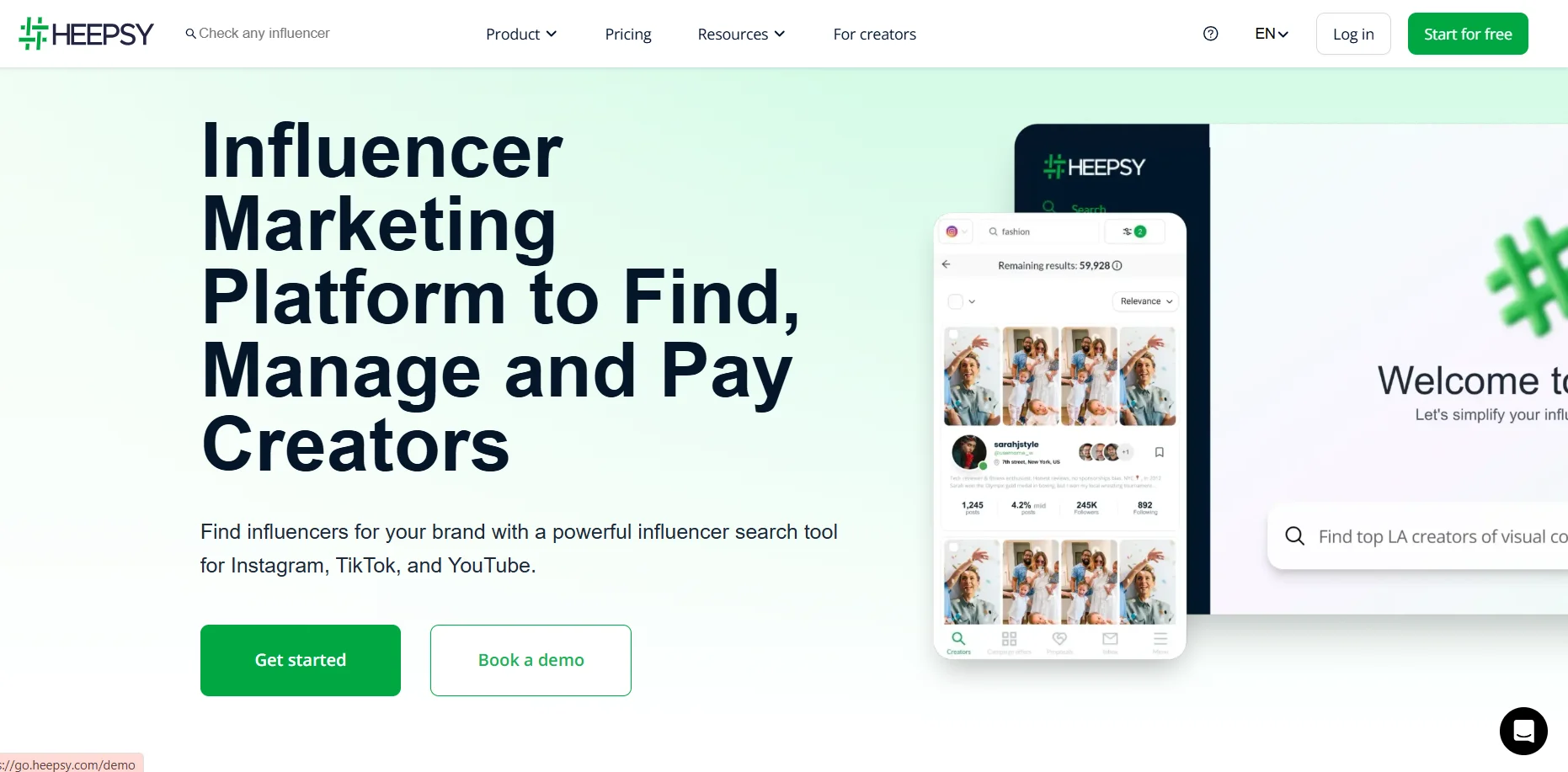
The cheapest credible discovery tool here, and it includes a Kanban style CRM on paid plans.
Audience authenticity analysis included rather than sold separately.
Bulk outreach on higher tiers, which speeds up volume campaigns.
Cons
The free plan shows you profiles exist without letting you act on them, so it functions more as a demo than a working tier.
No payment tooling at any level.
Who should not use this: teams wanting end to end campaign management. This is a discovery and vetting tool with light workflow attached.
Pricing: Starter $89, Plus $249, Advanced $369 monthly, with annual discounts.
Best for Scaling Without Enterprise Pricing
The middle tier, where most brands leaving Tomoson should actually land.
4. Modash
Best for: brands whose bottleneck is creator discovery at scale.
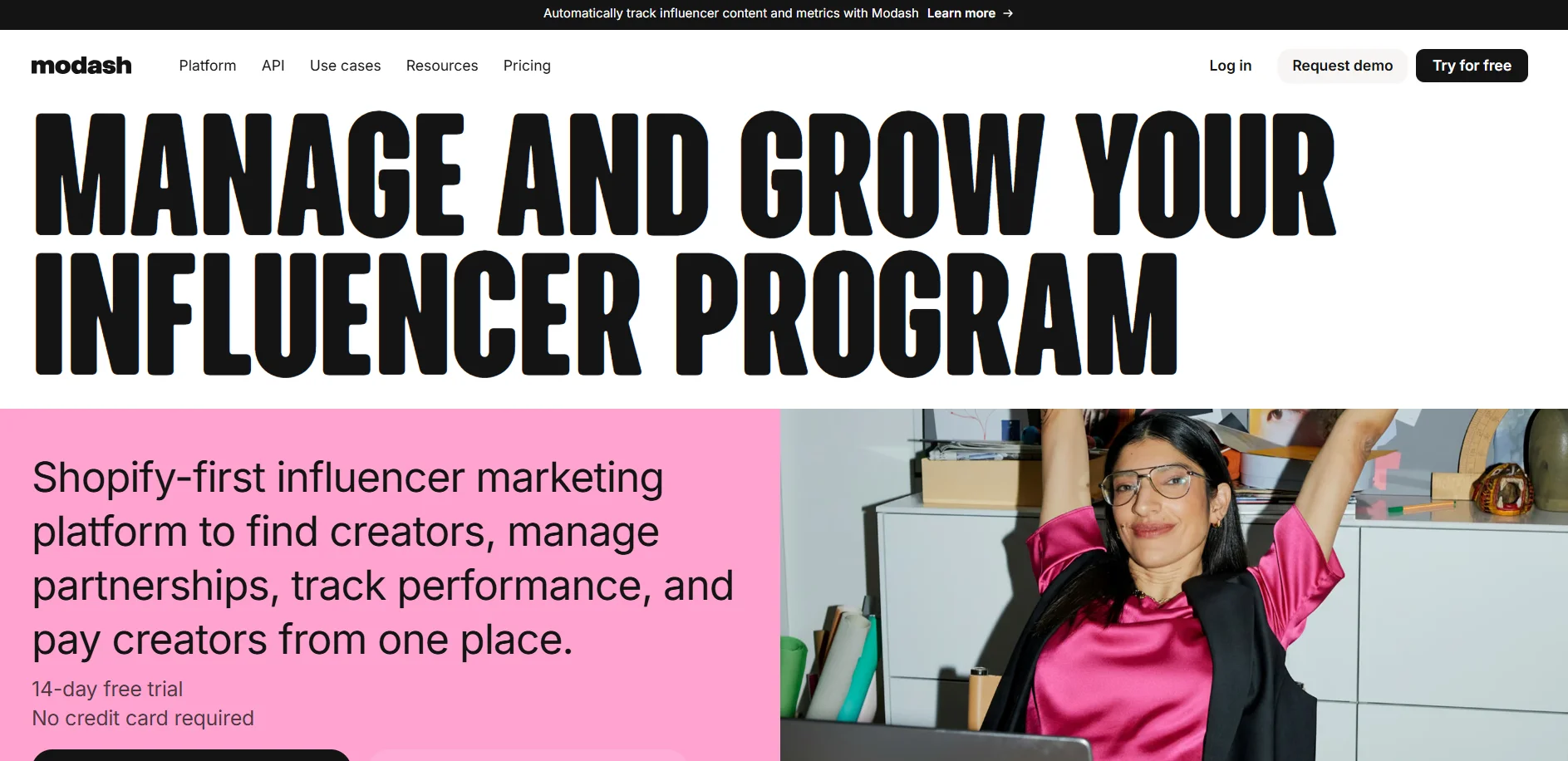 Modash indexes essentially any creator above 1,000 followers on Instagram, TikTok and YouTube, which is reported at over 250 million profiles.
Pros
The largest searchable database in this list by a wide margin.
Native Shopify integration for tracking sales back to creators.
A 14 day free trial, which is rare above the marketplace tier.
Cons
Outreach and CRM features are deliberately light, so scaling programs often add a second tool.
Deep integrations are Shopify first, which limits other ecommerce stacks.
Who should not use this: teams needing a full campaign suite. Modash is a discovery engine with workflow attached rather than the reverse.
Pricing: from around $99 monthly at entry, commonly cited around $199 to $299 for working plans.
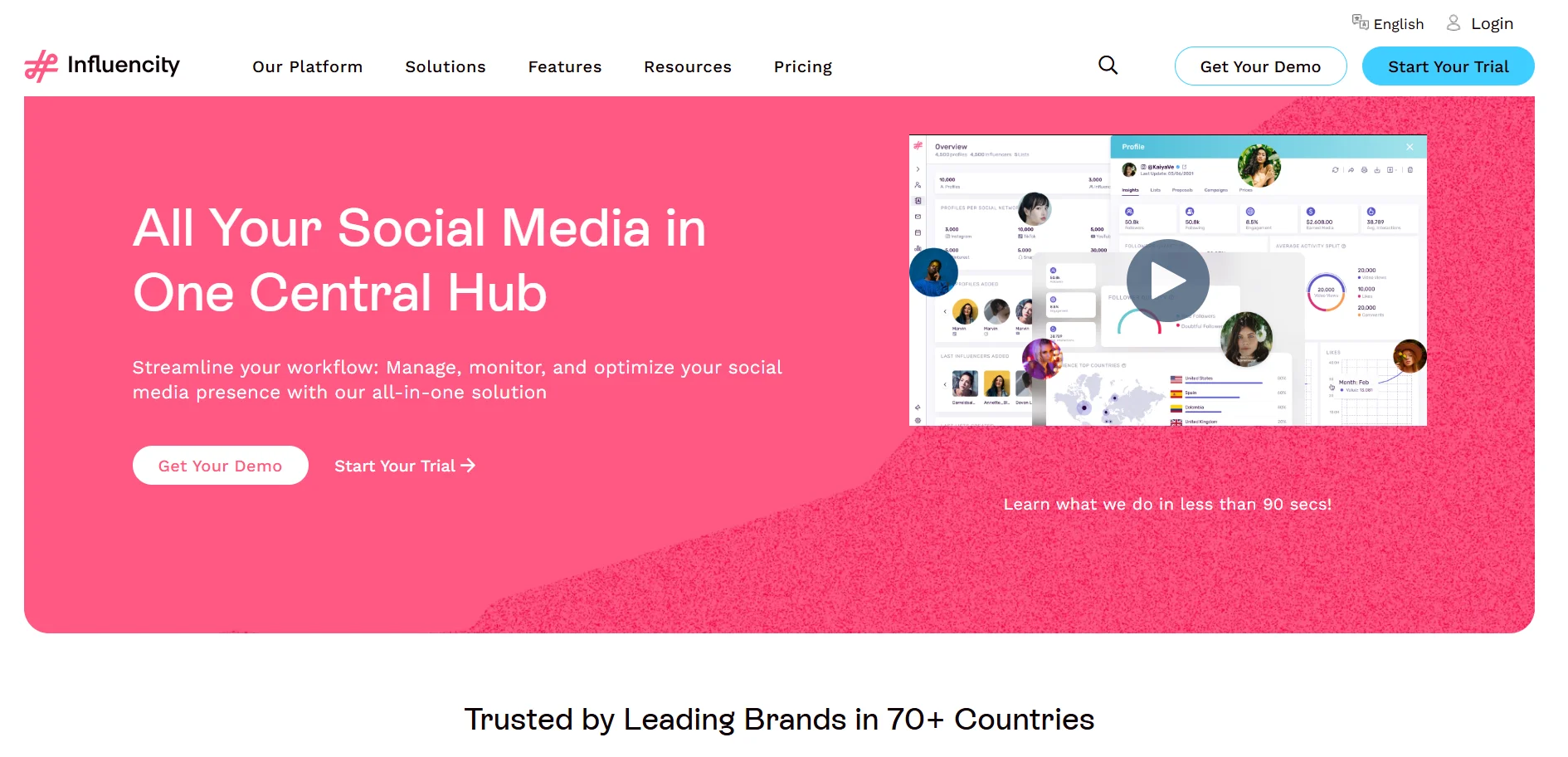
5. Influencity
Best for: mid market brands wanting all in one features without an enterprise contract.
 Pros
Pros
A 200 million plus creator database at a fraction of enterprise pricing.
Visual Kanban CRM with drag and drop pipeline stages, which suits teams managing many concurrent campaigns.
No per influencer fees, so costs stay predictable as programs grow.
Cons
Less brand recognition than the enterprise names, which can matter internally when justifying spend.
Reporting depth trails the top tier platforms.
Who should not use this: enterprises needing multi brand portfolio management and compliance features.
Pricing: from around $168 monthly, with plans commonly cited between $318 and $348 and higher tiers reaching about $2,108.
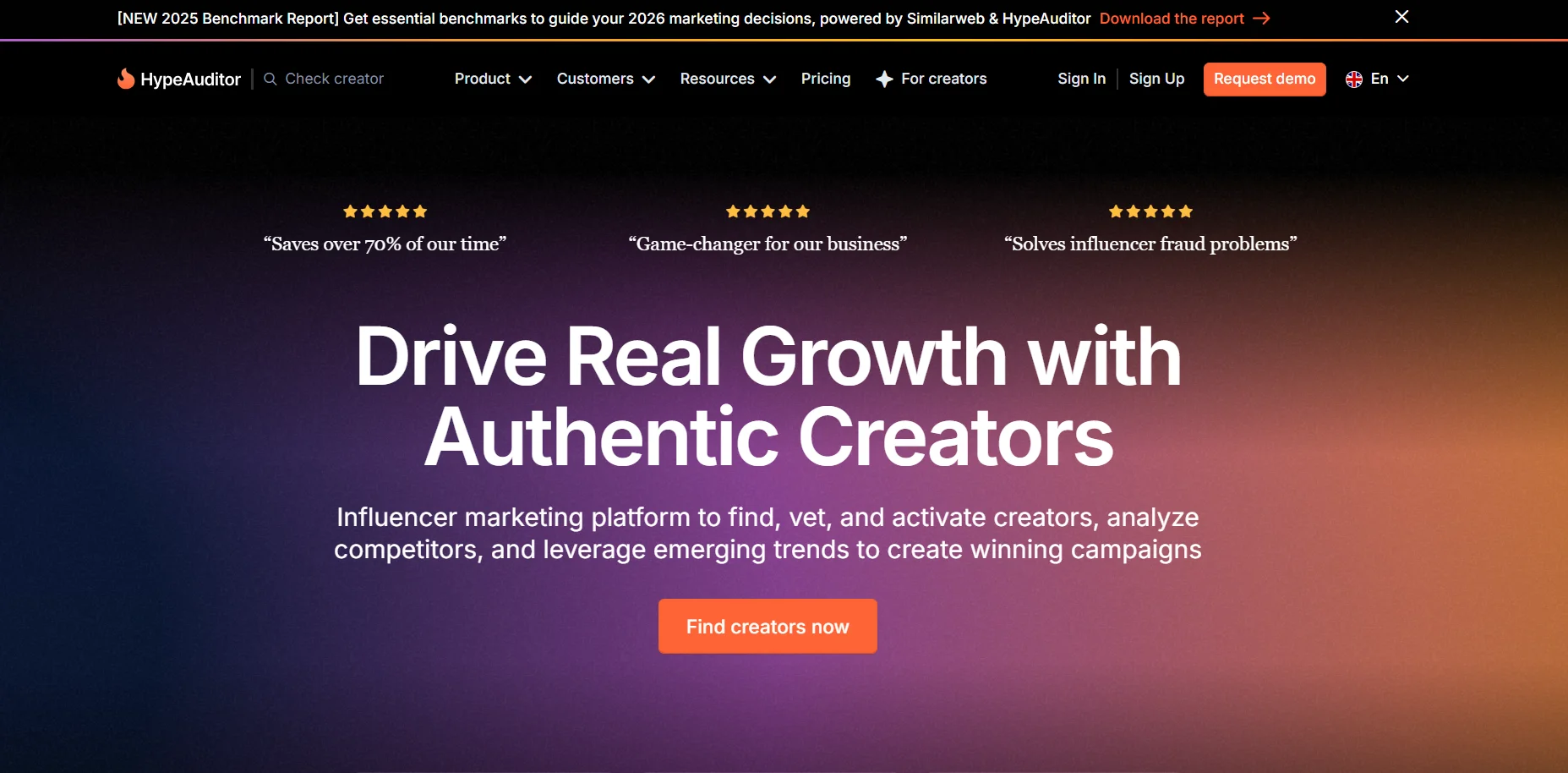
6. HypeAuditor
Best for: brands where creator authenticity is the deciding factor.
 Pros
Pros
The strongest fraud detection here, with audience quality scoring across a 220 million plus database.
A free version and one off creator reports, useful if you only need occasional vetting.
Analytics depth that discovery only tools do not match.
Cons
Pricing is not published clearly, with figures reported across a very wide range.
Campaign management is lighter than its analytics suggest.
Who should not use this: teams wanting to run and manage campaigns end to end rather than evaluate creators.
Pricing: around $299 monthly commonly cited, with agency plans reaching several thousand.
7. Upfluence
Best for: ecommerce brands turning existing customers into creators.
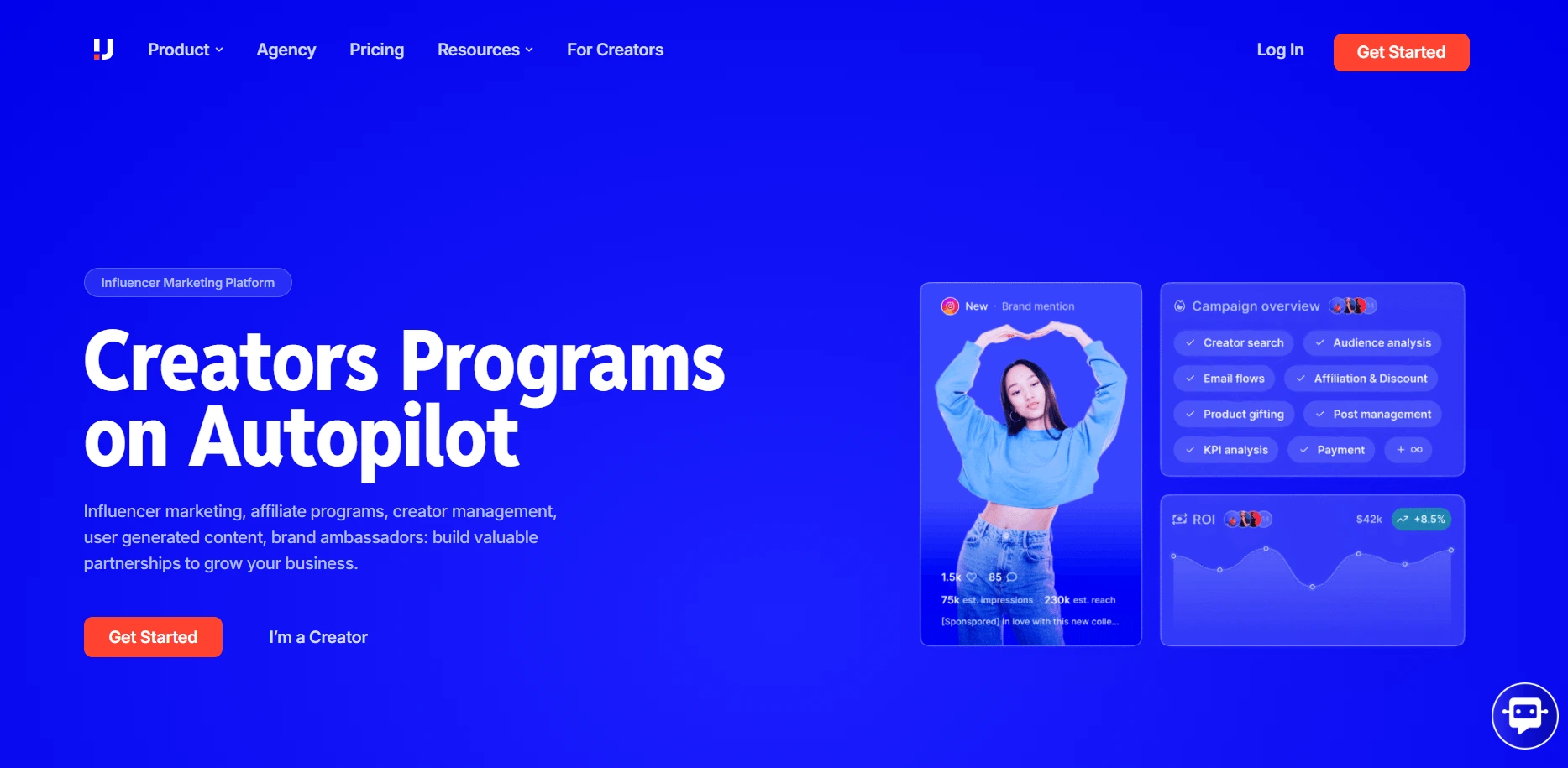 Upfluence's distinctive feature identifies existing customers who already have an audience, turning buyers into advocates rather than recruiting strangers.
Pros
Deep search filters across multiple social platforms.
Integrations spanning Shopify, WooCommerce, Magento, BigCommerce and Amazon.
Outreach automation that handles high volume without manual drafting.
Cons
Module based pricing on twelve month minimum contracts, so testing is difficult.
The interface is functional but dense, and pricing requires a demo call.
Who should not use this: brands wanting to trial before committing. The contract structure does not allow it.
Pricing: from around $478 monthly on annual terms.
Best for UGC and Paid Social
8. Aspire
Best for: brands running UGC heavy campaigns feeding paid advertising.
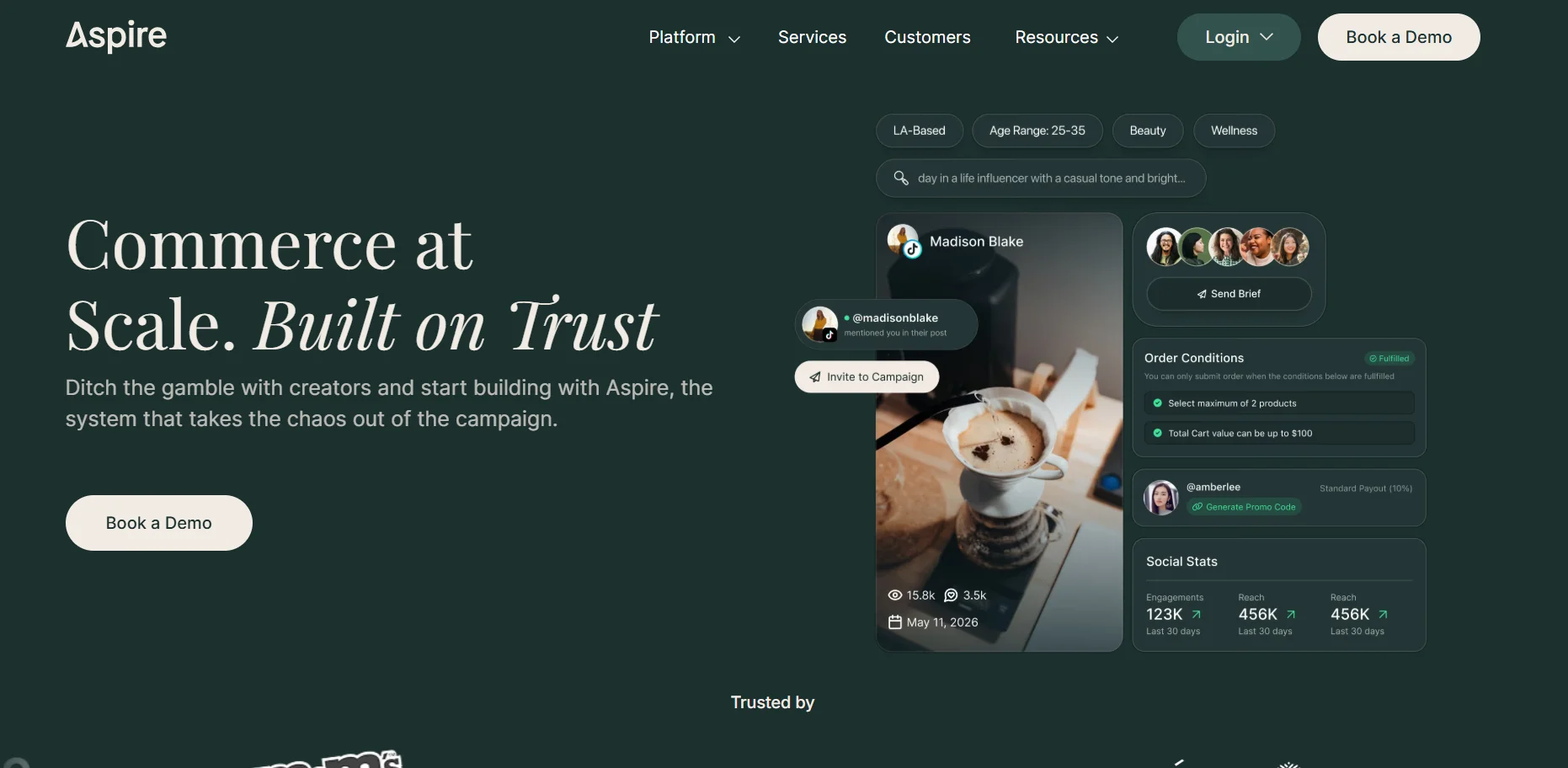 Aspire runs a marketplace where creators opt in and apply to brands, which produces warmer outreach and better response rates than cold discovery.
Pros
Marketplace model means creators come to you, improving reply rates.
Strong workflow automation across the campaign lifecycle.
Well suited to ambassador programs and content licensing.
Cons
Annual quote based plans with no self serve trial.
The creator pool is smaller than pure discovery platforms.
Who should not use this: small brands testing the channel. The pricing floor assumes an established program.
Pricing: reported from around $500 monthly, with fuller deployments cited near $2,499.
9. Insense
Best for: brands sourcing UGC specifically for paid social creative.
 Pros
Pros
Built around producing ad ready content rather than organic posts.
Creator briefs and content licensing handled in platform.
Strong fit for performance marketing teams rather than brand teams.
Cons
Narrower than a full influencer suite if you also need organic campaigns.
Pricing requires a sales conversation.
Who should not use this: brands wanting organic reach and long term creator relationships rather than ad creative.
Pricing: quote based.
10. Club (formerly Brandbassador)
Best for: brands building large ambassador communities rather than running one off campaigns.
 Brandbassador rebranded to Club in 2025, moving from Brandbassador.com to Club.co. Existing accounts, data and active campaigns were migrated across, and the app was renamed rather than replaced. If you evaluated it under the old name, it is the same product with a wider pitch, now covering affiliates and loyalty alongside ambassador missions.
Pros
Gamified mission structure that keeps ambassadors active over time.
Built for community scale rather than individual campaign management.
Strong fit for direct to consumer brands with engaged customer bases.
Cons
No creator database, so it manages the community you already have rather than helping you find one.
Quote only pricing with annual contracts, and onboarding fees reported on top.
Who should not use this: brands wanting transactional creator bookings, or any brand without an existing customer base to activate. This platform assumes you already have the community.
Pricing: quote based. Reported demo data puts the entry plan around $2,000 a month and the next tier near $3,000, both on annual terms.
Best for Enterprise Programs
Worth knowing, though most brands leaving Tomoson do not belong here yet.
11. GRIN
Best for: ecommerce brands running product seeding and affiliate programs at scale.
 GRIN assumes you sell physical products online. You ship products to creators from inside the platform, generate unique discount codes, and track every sale back to its source.
Pros
The deepest Shopify integration in this category, extending to WooCommerce, BigCommerce and Magento.
Product seeding logistics handled natively rather than bolted on.
Creator relationship management built for hundreds of concurrent partnerships.
Cons
Custom quote pricing with a twelve month minimum for new customers.
Annual contract values commonly land in the mid five to low six figures.
Who should not use this: anyone without a substantial existing program. The floor is high and the commitment is long.
Pricing: quote based, commonly cited around $2,200 monthly.
Procurement data shows meaningful negotiation room, with multi year commitments and annual prepayment reportedly cutting quotes by 20 to 30 percent.
12. CreatorIQ
Best for: enterprise teams managing multiple brands across global markets.
 Pros
Pros
Portfolio management across sub brands, which mid market tools cannot handle.
Standout trend analysis aligning creators with current cultural momentum.
Reporting depth built for boards rather than campaign managers.
Cons
No native ecommerce integrations, which is a frequently cited reason teams look elsewhere.
Evaluation takes weeks rather than a trial afternoon.
Who should not use this: direct to consumer brands needing transaction level attribution. That gap is real and specific.
Pricing: around $2,350 monthly reported, quote based.
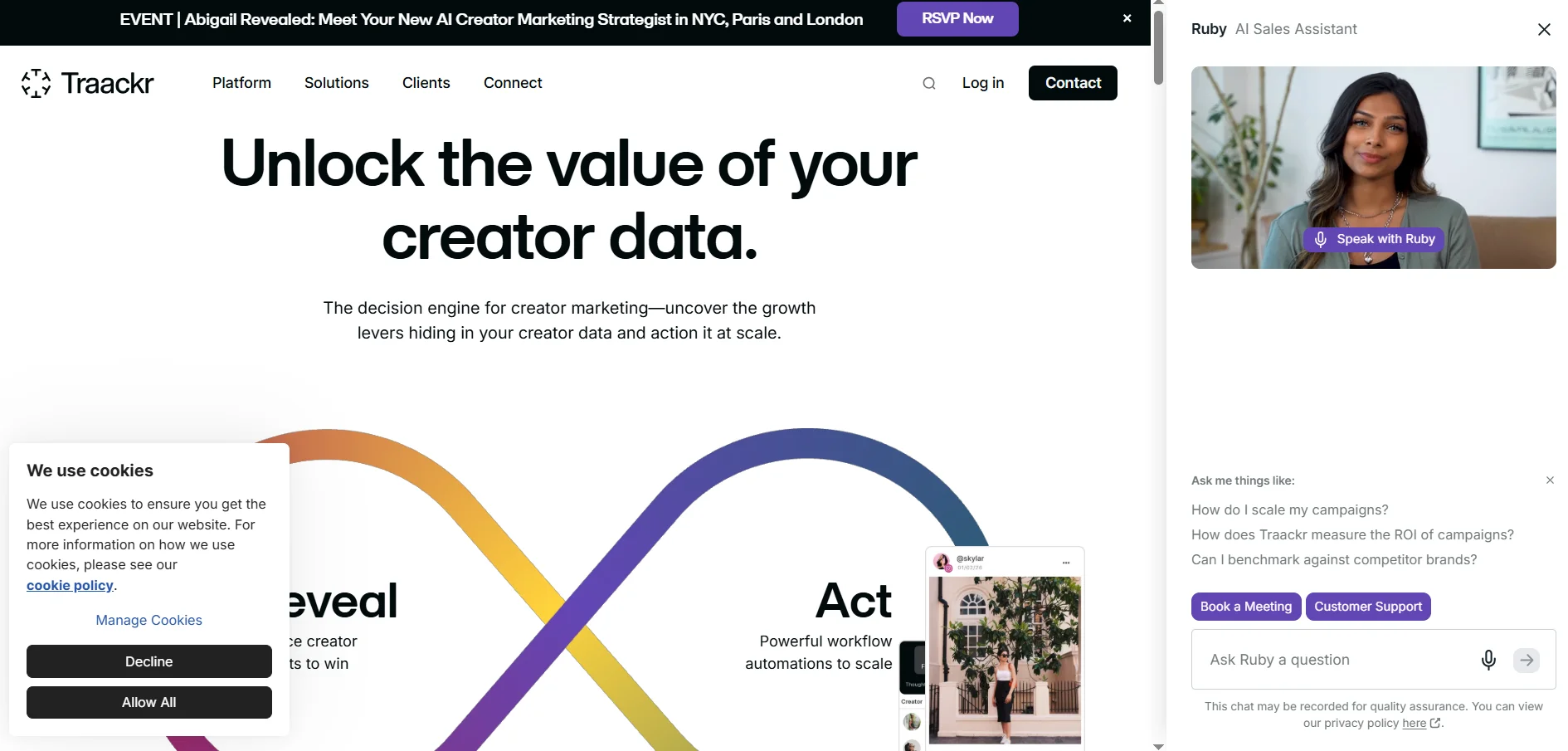
13. Traackr
Best for: data led teams building long term creator relationships across markets.
 Pros
Pros
A curated database of around seven million profiles, prioritising evaluation quality over raw size.
Strong relationship tracking and influence measurement over time.
Suited to brands treating creators as ongoing partners rather than campaign inputs.
Cons
The highest cost here by a clear margin.
Curated database means smaller reach for niche discovery.
Who should not use this: anyone whose primary need is finding new creators cheaply. You are paying for depth per profile.
Pricing: commonly reported between $25,000 and $55,000 annually.
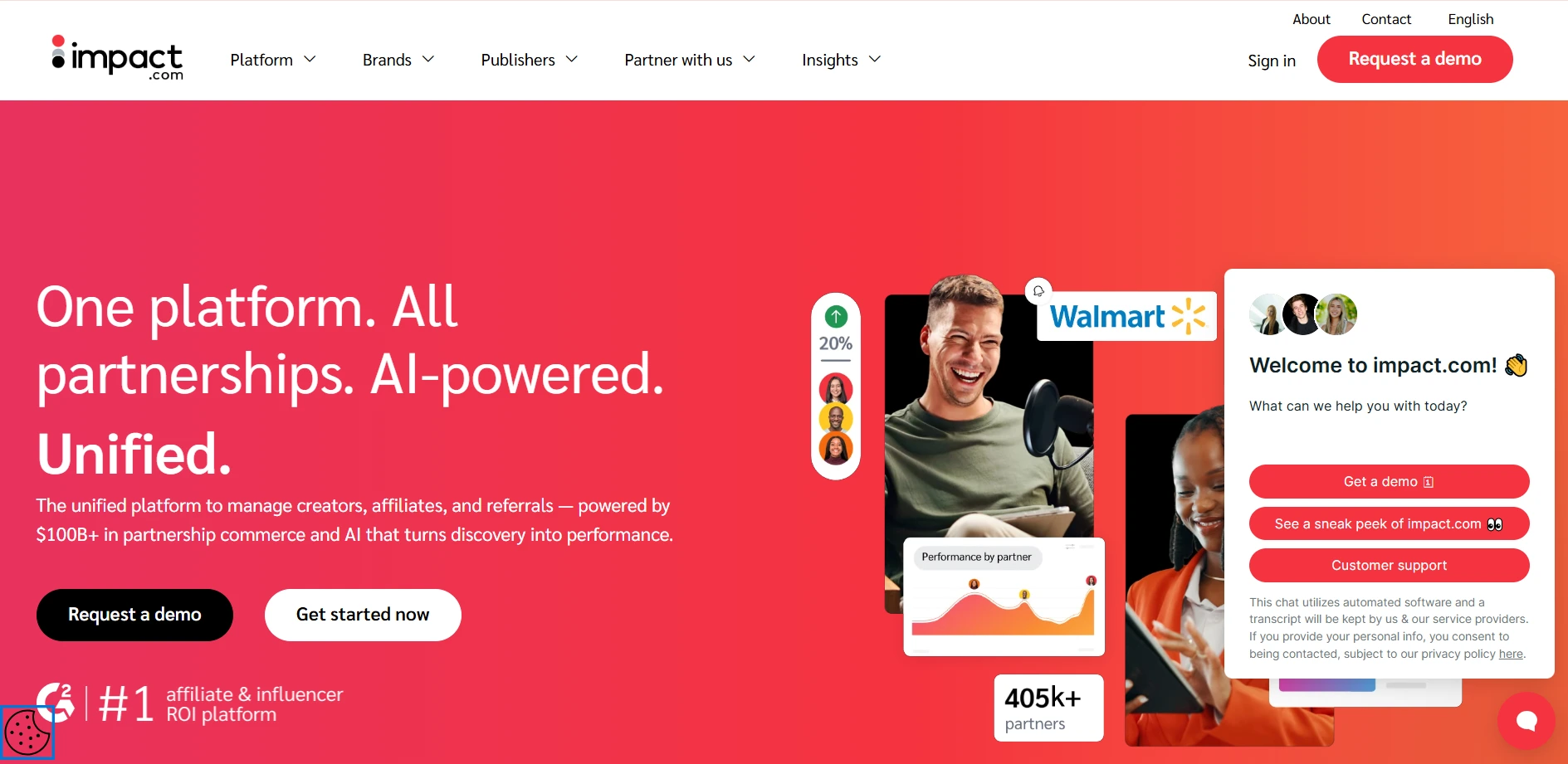
14. Impact.com
Best for: brands running affiliate, partnership and influencer programs as one system.
 Pros
Pros
Treats creators as one partnership type alongside affiliates and publishers.
Mature attribution and payment infrastructure.
Scales to very large partner counts without breaking.
Cons
Influencer specific tooling is lighter than dedicated creator platforms.
Enterprise pricing and complexity.
Who should not use this: brands wanting creator discovery and content workflows. This is partnership infrastructure first.
Pricing: quote based.
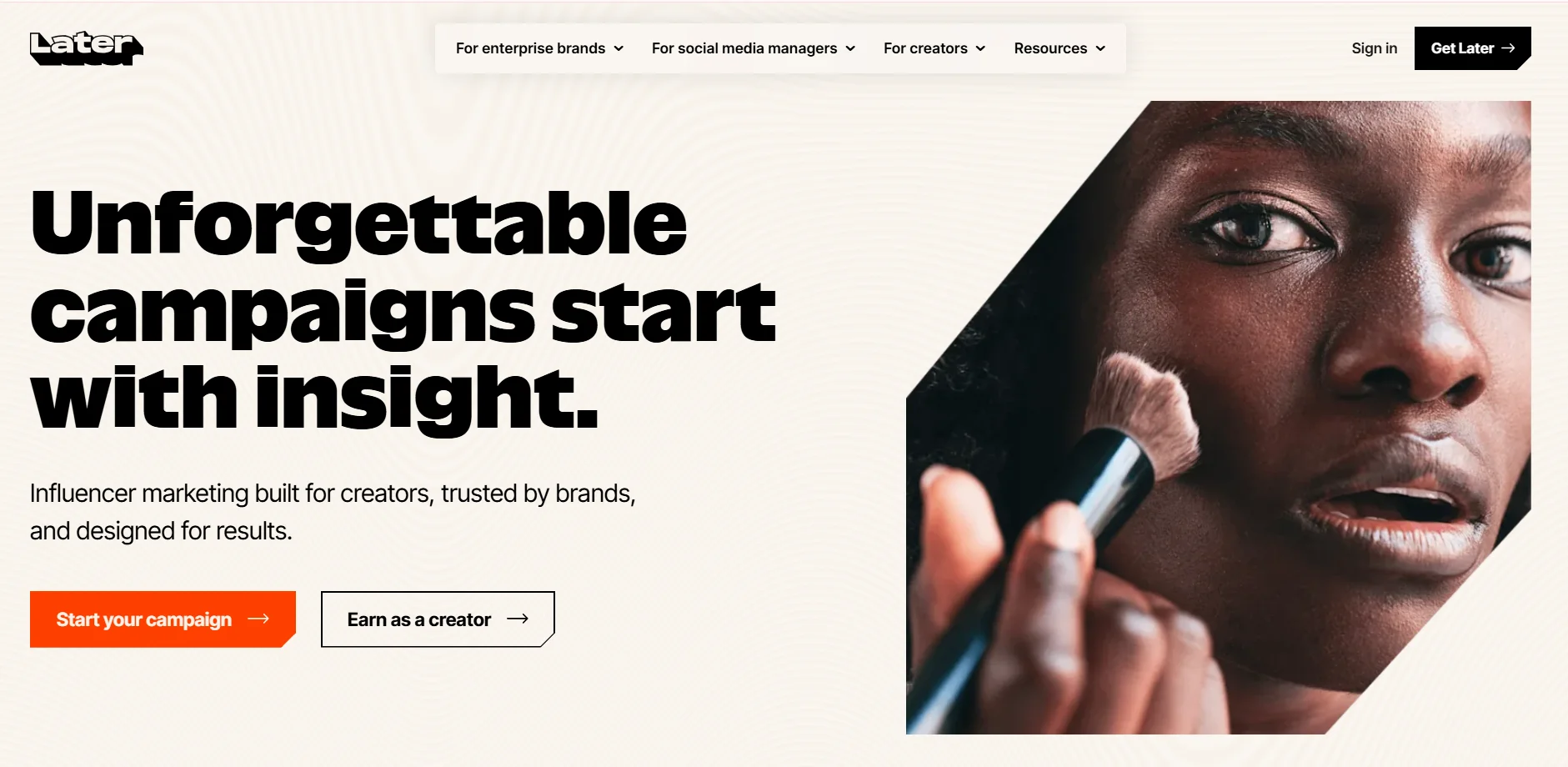
15. Later Influence
Best for: social first marketing teams already managing publishing in one place.
 Pros
Pros
Influencer management sits alongside social scheduling and analytics.
Sensible if your team already runs social content centrally.
Campaign workflow suited to marketing teams rather than dedicated influencer staff.
Cons
Less specialised than dedicated creator platforms.
Pricing requires a demo.
Who should not use this: teams needing deep ecommerce attribution or enterprise portfolio reporting.
Pricing: quote based.
Database Size Is Not the Metric You Think
Worth pausing on, because it is the specification vendors compete on hardest.
Modash indexes over 250 million profiles. Traackr curates around seven million. That looks like a decisive gap until you consider what each is for.
A larger database casts a wider net, which matters when your product serves a narrow niche and you need creators nobody else has found.
A curated database reduces noise, which matters when you are evaluating a shortlist properly rather than searching broadly.
Neither is better in the abstract. Ask which problem you have. Finding creators, or assessing them.
Ask About Your Data Before You Sign
This is the question nobody asks during a demo, and it decides how trapped you are in two years.
An influencer platform accumulates things you cannot easily rebuild. Your creator roster with contact details, message history, negotiated rates, signed agreements, performance data per creator, and a content library you hold licensing rights to.
Ask each vendor, in writing, what you can export and in what format.
The answers vary more than you would expect. Some hand over a clean CSV of creators and a bulk download of content. Others let you export a contact list and nothing else, which means your rate history and performance data stay behind.
That matters most at the enterprise tier, where twelve month minimums mean committing before you know whether the platform fits.
It also affects negotiation. A vendor confident about export answers plainly. A vague answer tells you the switching cost is part of their retention strategy.
One practical step regardless of platform. Keep your own record of creator contacts, agreed rates and licensing terms outside the tool.
A spreadsheet updated monthly costs almost nothing and means no platform ever holds your relationships hostage. Brands stay on software they have outgrown purely because leaving means rebuilding a roster from memory, and that is entirely avoidable.
How to Choose
Six questions, roughly in the order they should decide things.
What is your annual influencer budget? This selects your tier before anything else. Platform cost should be a fraction of the spend it manages, not a match for it.
Do you need attribution or just reach? Sales tracking per creator requires ecommerce integration, which rules out several otherwise capable platforms.
Which ecommerce stack do you run? Shopify is universally supported. WooCommerce, Magento and BigCommerce narrow the field considerably.
Can you commit to twelve months? Most enterprise platforms require it. If you cannot, your realistic list is the marketplace and budget tiers.
Who operates it? A platform needing a dedicated influencer marketer is wasted on a team where marketing is one person's half job.
How many concurrent campaigns? Under five, a spreadsheet plus a discovery tool works. Above twenty, you need a CRM and automation.
Tomoson Compared to the Alternatives
Tomoson still wins in one specific situation, and it is worth saying plainly.
If you are a small ecommerce seller who wants product reviews and social proof, with a modest budget and no dedicated marketer, Tomoson does that job at a price nothing on this list beats meaningfully.
I went through what the platform's own terms and FAQs actually say in this piece on whether Tomoson is legit, including a reach calculation that explains most of the complaints about creator quality.
Where it falls behind is everything after that. No sales attribution, a small creator pool, thin analytics, no fraud detection, and no ecommerce integration.
So the question is not whether alternatives are better. It is whether you have hit any of those five walls yet.
If you have not, switching costs you money and setup time to solve problems you do not have.
Which Alternative Fits You
Small businesses: Collabstr or Afluencer, where there is no subscription risk before you validate the channel.
Ecommerce brands: Modash for discovery with Shopify tracking, or GRIN once your program justifies the contract.
Agencies: Influencity or Heepsy, both of which handle multiple clients without enterprise pricing.
Enterprise: CreatorIQ for portfolio management, Traackr for relationship depth.
Creators and influencers: Collabstr, where your rates are listed publicly and brands come to you.
Budget conscious: Heepsy at $89, or Collabstr with no subscription at all.
Frequently Asked Questions
What is the best Tomoson alternative?
It depends on budget. Collabstr for no subscription, Modash for discovery scale, GRIN for established ecommerce programs.
Is there a free alternative to Tomoson?
Yes. Collabstr is free to browse and buy per project, while Heepsy, HypeAuditor and Afluencer offer free tiers.
Which platform is best for influencer discovery?
Modash for database size at over 250 million profiles, or HypeAuditor when audience authenticity matters most.
Which Tomoson alternative works best for Shopify?
GRIN and Modash both offer native Shopify integration. Upfluence extends to WooCommerce, Magento and BigCommerce.
What features should an influencer marketing platform have?
Creator discovery, audience analytics, campaign workflow, fraud detection, and sales attribution if you sell products online.
Can small businesses use these platforms?
Yes. Marketplace tools need no subscription, and discovery platforms start around $89 monthly.
How do the alternatives compare on pricing?
Four tiers. Marketplace from free, budget around $89 to $199, mid market $300 to $600, enterprise $2,000 upward.
Which is best for managing campaigns at scale?
GRIN or Aspire for ecommerce programs, CreatorIQ for multi brand enterprise portfolios.
What I Would Do
Work out which of the five walls you have actually hit before opening a single demo.
If it is discovery, buy a discovery tool. If it is attribution, buy ecommerce integration. If it is volume, buy a CRM.
Replacing everything because one part hurts is how brands end up paying enterprise prices for capability they never switch on.
And check the contract term before the feature list. A twelve month minimum on a platform you have not tested is a bigger commitment than the monthly figure suggests.
Tomoson's plan names and prices were taken from its own pricing page and brand FAQ, checked directly on August 25, 2026. Self serve prices for Heepsy, Modash and Influencity come from their published pricing pages. All other figures are reported or procurement sourced, since those vendors do not publish. Pricing in this category moves, so confirm before you commit.